Showing posts with label Gone With the Wind. Show all posts

Monday, June 10, 2024

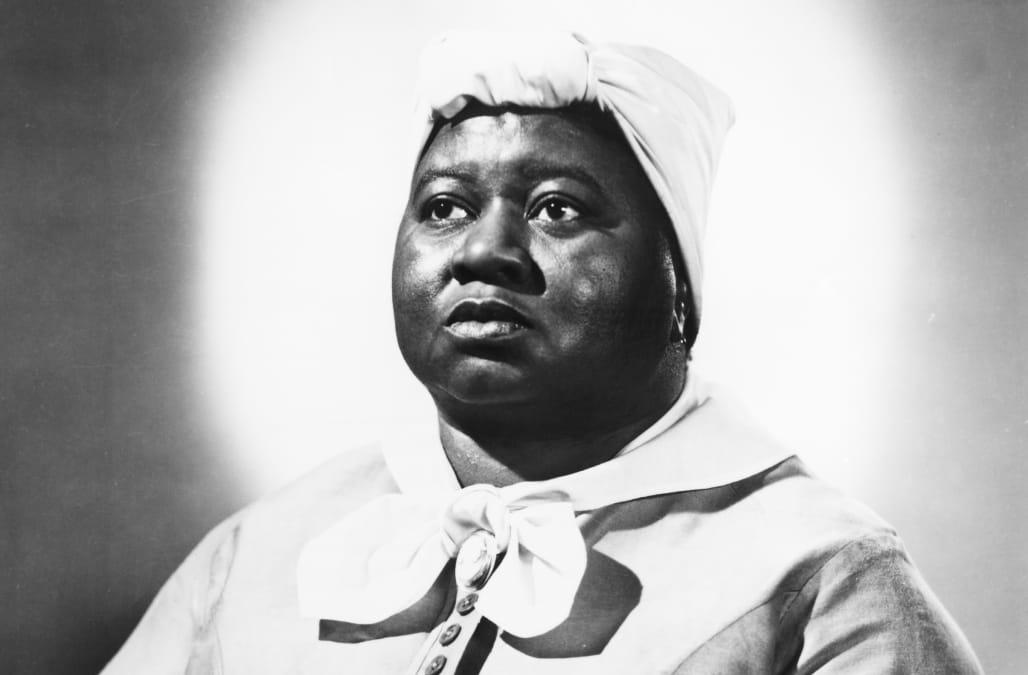
Happy Birthday, Hattie McDaniel!

Today would have been Hattie McDaniel's 131st birthday. She died back in 1952, but she was born on June 10, 1893. Hattie McDaniel starred in one of my favorite movies, 1939's Gone With the Wind. Although this movie is a favorite of many, it is not without controversy. And, Ms. McDaniel, the daughter of former slaves, found herself in the thick of it.

If you are not familiar with Hattie McDaniel, here are some highlights from Wikipedia:

Hattie McDaniel was an American actress, singer-songwriter, and comedienne. For her role as Mammy in Gone with the Wind (1939), she won the Academy Award for Best Supporting Actress, becoming the first African American to win an Oscar

The competition to win the part of Mammy in Gone with the Wind was almost as fierce as that for Scarlett O'Hara. First Lady Eleanor Roosevelt wrote to film producer David O. Selznick to ask that her own maid, Elizabeth McDuffie, be given the part. McDaniel did not think she would be chosen, because she had earned her reputation as a comic actress. One source claimed that Clark Gable recommended that the role be given to McDaniel; in any case, she went to her audition dressed in an authentic maid's uniform and won the part.
Loew's Grand Theater on Peachtree Street in Atlanta was selected by the studio as the site for the Friday, December 15, 1939, premiere of Gone with the Wind. Studio head David O. Selznick asked that McDaniel be permitted to attend, but MGM advised him not to, because of Georgia's segregation laws. Clark Gable threatened to boycott the Atlanta premiere unless McDaniel were allowed to attend, but McDaniel convinced him to attend anyway.

Most of Atlanta's 300,000 citizens crowded the route of the seven-mile (11 km) motorcade that carried the film's other stars and executives from the airport to the Georgian Terrace Hotel, where they stayed. While Jim Crow laws kept McDaniel from the Atlanta premiere, she did attend the film's Hollywood debut on December 28, 1939. Upon Selznick's insistence, her picture was also featured prominently in the program.

For her performance as the house servant who repeatedly scolds her owner's daughter, Scarlett O'Hara (Vivien Leigh), and scoffs at Rhett Butler (Clark Gable), McDaniel won the 1939 Academy Award for Best Supporting Actress, the first Black actor to have been nominated and win an Oscar. "I loved Mammy", McDaniel said when speaking to the white press about the character. "I think I understood her because my own grandmother worked on a plantation not unlike Tara". Her role in Gone with the Wind had alarmed some whites in the South; there were complaints that in the film she had been too "familiar" with her white owners.

While many Black people were happy over McDaniel's personal victory, they also viewed it as bittersweet. They believed Gone With the Wind celebrated the slave system and condemned the forces that destroyed it. For them, the unique accolade McDaniel had won suggested that only those who did not protest Hollywood's systemic use of racial stereotypes could find work and success there.

Ms. McDaniel received criticism from the black community during her lifetime for playing maids, but she said she 'd rather play a maid for $700 a week, than be one for $7 a week.  

The 12th Academy Awards took place at Coconut Grove Restaurant of the Ambassador Hotel in Los Angeles. It was preceded by a banquet in the same room. 

McDaniel received a plaque-style Oscar, approximately 5.5 in (14 cm) by 6 in (15 cm), the type awarded to all Best Supporting Actors and Actresses at that time. She and her escort were required to sit at a segregated table for two at the far wall of the room; her white agent, William Meiklejohn, sat at the same table. The hotel had a strict no-Blacks policy but allowed McDaniel in as a favor. The discrimination continued after the award ceremony as well; her white co-stars went to a "no-Blacks" club, where McDaniel was also denied entry.

For more information on the life of Hattie McDaniel, click here.

Despite the various controversies, Ms. McDaniel's outstanding performance as Mammy will never be forgotten!

Have you ever seen Gone With the Wind? Thanks for visiting and have a great week!

Monday, March 29, 2021

From Novel to Screenplay


Gone With the Wind is  a movie that's just as phenomenal as the book it's  based on. But have you noticed that's not always the case when  a novel  is made into a motion picture?

When I first posted this article back in August of 2018, I had just started adapting one of my novels into a screenplay. That task is complete, and it was quite a learning experience! Now I understand why some movies fall flat when compared to the novels they're based on.  

Forget about introspection and long descriptions, plus subplots have to be dropped and minor characters combined or omitted in order to condense a three-hundred and fifty page novel into a one-hundred and twenty-five page screenplay. If you have ever considered turning a novel into a screenplay, here's a portion of an article from Scriptmag.com to help you start the adaptation process:


First, make a list of the following:

  • The world and setting of the story.
  • The 5–8 main characters of the story including the protagonist and antagonist, what their respective back stories are and why/how they come together.
  • What 5 things about your main protagonist/antagonist are the most important for an audience to know.
  • The major core conflict of the story and why/how this occurs.
  • The most visual and key scenes in the book that connect to how that conflict plays out.
  • Your 10–20 FAVORITE lines of dialogue that drive the plot, are vital to the story or character development and that really shine.
  • The major overarching theme of the book.
Margaret Mitchell with her novel
Be aware that you will probably have to cut many supporting characters, subplots that don’t connect to your main storyline, and almost all of the description. Instead of two pages of character description, you only get two lines. Often, two or three different characters in a novel will be combined into ONE character in a screenplay. And what happens on the first page of the book may not be how you need to open the film. Try to nail the same tone that the original material had—as that is part of what built its fan base and that tone needs to translate on film. But the real key to adapting a book to film or adapting someone’s true story—is FOCUS and knowing how and when to take poetic license.
If you are adapting a true story, it becomes even trickier, but you need to know that changing the timeline of the original story is OK. Your primary job isn’t to be loyal to a book or to another writer or even to the main character—it’s to be loyal to the core story and yourself. You can’t show a whole lifetime on screen (except maybe in Benjamin Button), so you need to choose the most important, interesting, conflict-filled, character-building part of the book or the person’s life—and focus on that to create a tight story.
Or alternatively, if you’re adapting a small personal story, you may need to expand it to fill the screen. All those Nicholas Sparks novels are incredibly small and usually depressing, but the screenplays introduce more conflict and raise the stakes. Though not based on a book, let’s examine Academy Award nominated The Fighter, which was based on a true story. The screenwriters looked at all the material they had—all the characters, all the true things that happened, the time range of the real story—and then wrote what worked. The Amy Adams character wasn’t even in Mickey’s life at the time he won those fights. Many characters were combined and the time period was totally fudged so that the story became more cinematic and engaging but it kept the essence of the characters involved, the story and the emotion of it all.
That’s exactly what your job is when adapting a book or person’s true life story. Much like in life, learning to adapt is often a difficult process but can be one of the keys to success. Keep writing!
For the complete article, click here.

Have you ever written a screenplay or considered writing one? Thanks for visiting and have a great week! 

Monday, January 25, 2021

Bad Girl as Protagonist


Lavinia Hargraves
Masquerade
Lying,  scheming, adultery, murder, multiple marriages, and extreme dislike of children are just a few things that make a bad girl really bad.  Readers may not fall in love with protagonists that exhibit these negative characteristics, but at least there's never a dull moment with them!

In MASQUERADE: Book Two of my Unchained Trilogy series, Bad Girl Protagonist Lavinia Hargraves is the star of the show.  She's actually introduced in the first part of the trilogy, Escape.  In that story, Lori is a slave girl, and Daniel Taylor the white man who falls in love with her and helps her to escape.  Eventually, they have three children, Lavinia  being their youngest.  


Gene Tierney as Ellen Berent
Leave Her to Heaven
Lavinia, who passes as white, despises her sister, who is kind and good, and hates her mother for being black and a former slave.  At seventeen, Lavinia runs off with fifty-four year old Vernon Hargraves, only because of what he can do for her.  Although Vernon truly loves Lavinia, the feeling isn't mutual on her part.  From that storyline, it's clear to see that Lavinia isn't the nicest person around. 
What drives some bad girl protagonists to be so bad?  Sometimes, mental illness can play a role.  If Lavinia had lived today, she probably would've been diagnosed with Narcissistic Personality Disorder, which, according to MayoClinic.com, "is a mental disorder in which people have an inflated sense of their own importance and a deep need for admiration. Those with narcissistic personality disorder believe that they're superior to others and have little regard for other people's feelings. But behind this mask of ultra-confidence lies a fragile self-esteem, vulnerable to the slightest criticism."
Vivien Leigh as Scarlett O'Hara
Gone with the Wind
Lavinia's personality, combined with her actions, make for some rather interesting situations, to say the least.  Lavinia joins the ranks of other bad girls in fiction, including Ellen Berent from the 1944 novel, LEAVE HER TO HEAVEN by Ben Ames Williams.  Ellen Berent, like Lavinia, is mentally imbalanced.  As well as having some unresolved father issues, Ellen is overly jealous for the attention of her husband, Richard Harland.  She indirectly causes Richard's crippled younger brother to drown, and then, when pregnant, throws herself down the stairs to cause a miscarriage. Without a baby, she won't have to share hubby's affection.  Finally, when it becomes clear that Ellen's adoptive sister Ruth is attracted to Richard, Ellen commits suicide, making her death appear to be murder and framing Ruth for the "crime."  Unbelievable!  Oh, yeah, it's fiction... 
Undeen Spragg
The Custom of the Country
Another motivation that drives bad women is control.  Let's take a look at fiery southern belle Scarlett O'Hara, from Margaret Mitchell's 1936 novel GONE WITH THE WIND.  Scarlett's sanity is in tact, but she's a total control freak!  Scarlett is determined to marry Ashley Wilkes (the wrong man who's already betrothed to his cousin, Melanie), and after the war, driven to save her plantation, Tara.  Scarlett marries once for spite (Charles Hamilton to make Ashley jealous) and twice for money (Frank Kennedy, her sister's fiancĂ©, and then the handsome rogue, Rhett Butler).  Scarlett eventually does fall in love with Rhett, after she's been married to him for a while.  But when she realizes this, and that a life with Ashley never would've been realistic (after numerous attempts to get him to dump Melanie, before, during and after her marriages), Rhett has had enough and leaves her.
The need for power, status and money drive some bad girls, like Undeen Spragg, the ruthless heroine from Edith Wharton's 1913 novel THE CUSTOM OF THE COUNTRY.  Undine is a social climber, who through multiple marriages and divorces, experiences the pleasure of money and aristocratic titles. Eventually, she settles on marrying someone from her hometown.  His money is new, and he's actually on her original social level.  At this point, Undeen has all that money can buy—yet she wants more.  At the end of the novel, she imagines what it would be like to be an ambassador's wife—a position she can never hold due to her divorces.
Bad girls may not endear themselves to readers, but their escapades are certain to keep the pages turning!  Who are some of your favorite bad girls in fiction? 
Thanks for visiting and have a great week!

Monday, March 4, 2019

Bad Girl as Protagonist

Lavinia Hargraves
Masquerade
Lying,  scheming, adultery, murder, multiple marriages, and extreme dislike of children are just a few things that make a bad girl really bad.  Readers may not fall in love with protagonists that exhibit these negative characteristics, but at least there's never a dull moment with them!

In MASQUERADE: Book Two of my Unchained Trilogy series, Bad Girl Protagonist Lavinia Hargraves is the star of the show.  She's actually introduced in the first part of the trilogy, EscapeIn that story, Lori is a slave girl, and Daniel Taylor the white man who falls in love with her and helps her to escape.  Eventually, they have three children, Lavinia  being their youngest.  


Gene Tierney as Ellen Berent
Leave Her to Heaven
Lavinia, who passes as white, despises her sister, who is kind and good, and hates her mother for being black and a former slave.  At seventeen, Lavinia runs off with fifty-four year old Vernon Hargraves, only because of what he can do for her.  Although Vernon truly loves Lavinia, the feeling isn't mutual on her part.  From that storyline, it's clear to see that Lavinia isn't the nicest person around. 

What drives some bad girl protagonists to be so bad?  Sometimes, mental illness can play a role.  If Lavinia had lived today, she probably would've been diagnosed with Narcissistic Personality Disorder, which, according to MayoClinic.com, "is a mental disorder in which people have an inflated sense of their own importance and a deep need for admiration. Those with narcissistic personality disorder believe that they're superior to others and have little regard for other people's feelings. But behind this mask of ultra-confidence lies a fragile self-esteem, vulnerable to the slightest criticism."
Vivien Leigh as Scarlett O'Hara
Gone with the Wind
Lavinia's personality, combined with her actions, make for some rather interesting situations, to say the least.  Lavinia joins the ranks of other bad girls in fiction, including Ellen Berent from the 1944 novel, LEAVE HER TO HEAVEN by Ben Ames Williams.  Ellen Berent, like Lavinia, is mentally imbalanced.  As well as having some unresolved father issues, Ellen is overly jealous for the attention of her husband, Richard Harland.  She indirectly causes Richard's crippled younger brother to drown, and then, when pregnant, throws herself down the stairs to cause a miscarriage. Without a baby, she won't have to share hubby's affection.  Finally, when it becomes clear that Ellen's adoptive sister Ruth is attracted to Richard, Ellen commits suicide, making her death appear to be murder and framing Ruth for the "crime."  Unbelievable!  Oh, yeah, it's fiction... 
Undeen Spragg
The Custom of the Country
Another motivation that drives bad women is control.  Let's take a look at fiery southern belle Scarlett O'Hara, from Margaret Mitchell's 1936 novel GONE WITH THE WIND.  Scarlett's sanity is in tact, but she's a total control freak!  Scarlett is determined to marry Ashley Wilkes (the wrong man who's already betrothed to his cousin, Melanie), and after the war, driven to save her plantation, Tara.  Scarlett marries once for spite (Charles Hamilton to make Ashley jealous) and twice for money (Frank Kennedy, her sister's fiancĂ©, and then the handsome rogue, Rhett Butler).  Scarlett eventually does fall in love with Rhett, after she's been married to him for a while.  But when she realizes this, and that a life with Ashley never would've been realistic (after numerous attempts to get him to dump Melanie, before, during and after her marriages), Rhett has had enough and leaves her.
The need for power, status and money drive some bad girls, like Undeen Spragg, the ruthless heroine from Edith Wharton's 1913 novel THE CUSTOM OF THE COUNTRY.  Undine is a social climber, who through multiple marriages and divorces, experiences the pleasure of money and aristocratic titles. Eventually, she settles on marrying someone from her hometown.  He's a millionaire, his money is new, and he's actually on her original social level.  At this point, Undeen has all that money can buy—yet she wants more.  At the end of the novel, she imagines what it would be like to be an ambassador's wife—a position she can never hold due to her divorces.
Bad girls may not endear themselves to readers, but their escapades are certain to keep the pages turning!  Who are some of your favorite bad girls in fiction? 
Thanks for visiting and have a great week!

Monday, August 20, 2018

From Novel to Screenplay


Gone With the Wind is  a movie that's just as phenomenal as the book it's  based on. But have you noticed that's not always the case when  a novel  is made into a motion picture?

Right now I'm in the process of adapting one of my novels into a screenplay and have found it to be a rather daunting process. Now I understand why some movies fall flat when compared to the novels they're based on.  

Forget about introspection and long descriptions, plus subplots have to be dropped and minor characters combined or omitted in order to condense a three-hundred and fifty page novel into a one-hundred and twenty-five page screenplay. If you have ever considered turning a novel into a screenplay, here's a portion of an article from Scriptmag.com to help you start the adaptation process:


First, make a list of the following:

  • The world and setting of the story.
  • The 5–8 main characters of the story including the protagonist and antagonist, what their respective back stories are and why/how they come together.
  • What 5 things about your main protagonist/antagonist are the most important for an audience to know.
  • The major core conflict of the story and why/how this occurs.
  • The most visual and key scenes in the book that connect to how that conflict plays out.
  • Your 10–20 FAVORITE lines of dialogue that drive the plot, are vital to the story or character development and that really shine.
  • The major overarching theme of the book.
Margaret Mitchell with her novel
Be aware that you will probably have to cut many supporting characters, subplots that don’t connect to your main storyline, and almost all of the description. Instead of two pages of character description, you only get two lines. Often, two or three different characters in a novel will be combined into ONE character in a screenplay. And what happens on the first page of the book may not be how you need to open the film. Try to nail the same tone that the original material had—as that is part of what built its fan base and that tone needs to translate on film. But the real key to adapting a book to film or adapting someone’s true story—is FOCUS and knowing how and when to take poetic license.
If you are adapting a true story, it becomes even trickier, but you need to know that changing the timeline of the original story is OK. Your primary job isn’t to be loyal to a book or to another writer or even to the main character—it’s to be loyal to the core story and yourself. You can’t show a whole lifetime on screen (except maybe in Benjamin Button), so you need to choose the most important, interesting, conflict-filled, character-building part of the book or the person’s life—and focus on that to create a tight story.
Or alternatively, if you’re adapting a small personal story, you may need to expand it to fill the screen. All those Nicholas Sparks novels are incredibly small and usually depressing, but the screenplays introduce more conflict and raise the stakes. Though not based on a book, let’s examine Academy Award nominated The Fighter, which was based on a true story. The screenwriters looked at all the material they had—all the characters, all the true things that happened, the time range of the real story—and then wrote what worked. The Amy Adams character wasn’t even in Mickey’s life at the time he won those fights. Many characters were combined and the time period was totally fudged so that the story became more cinematic and engaging but it kept the essence of the characters involved, the story and the emotion of it all.
That’s exactly what your job is when adapting a book or person’s true life story. Much like in life, learning to adapt is often a difficult process but can be one of the keys to success. Keep writing!
For the complete article, click here.
Have you ever written a screenplay or considered writing one? Thanks for visiting and have a great week!

Monday, July 23, 2012

Barbecued Ribs: Easy and Delicious


Oven Baked Ribs: Unbelievable Easy!
I love barbecue, but I can't imagine enjoying it while being laced up in a corset and wearing a frilly dress!  It's too messy and too filling.  Remember that scene in Gone With the Wind where Mammy helps Scarlett dress for the Twelve Oaks barbecue?   

Mammy:  “I done told you and told you, you can always tell a lady by the way she eats in front of people - like a bird. And I ain't aimin' to have you go over to Mista John Wilkes' house and eat like a field hand and gobble like a hog,”

Scarlett:  Fiddle dee-dee! Ashley Wilkes says he likes to see a girl with a healthy appetite.

"Every girl has the right to eat and enjoy barbecue!"

Click here to watch the entire scene.  Thank goodness times have changed.  Nowadays it’s healthy for a girl to have a healthy appetite.  We’ve learned to depend on exercise and eating right to maintain our shapes rather than imprisoning ourselves in corsets, and we can wear shorts and a t-shirt to a picnic instead of our Sunday best!

Barbecued ribs are one of my favorite dishes, and I’ve only learned recently—at my thirteen year old's insistence—how to prepare them!  This is cookout season and Labor Day picnics are right around the corner.  It’s the perfect time for ribs—and it doesn’t matter if they’re grilled or baked! 

I found this awesome recipe at Food.com! These ribs are amazing and super easy, so I hope you’ll give them a try.  Yeah, I know, ribs aren’t healthy or low fat, but it’s okay to splurge once in a while, so enjoy!

Low & Slow Oven Baked Ribs

Ingredients:

2 racks of baby back ribs or St. Louis Style ribs
1 cup of your favorite BBQ sauce (I use Montgomery Inn)

Directions

Preheat oven to 225

Season ribs with Dale’s marinade your favorite rib rub (I use this fantastic Kansas City Rub), grill seasoning or just salt and pepper

Place ribs meat side down in baking dish (I buy a huge aluminum pan for this)

Cover dish with aluminum foil and place in oven

If using small baby back ribs, take out of oven after 3.5 hours.  If using regular baby back or St. Louis style, take out after 4

Drain off drippings. Flip meat over using two spatulas so the meat side is up. Put a layer of BBQ sauce on ribs, and return to oven for 20-30 minutes.

Great with baked beans and slaw!

If you’ve read The Governor’s Sons (here's the Kirkus Review), you’ve probably determined that I love writing about food.  And anyone who likes writing about food loves eating, too!  My second book, Escape: Book One of the Unchained Trilogy, is due out next month. Like The Governor’s Sons, it takes place in the South, but the time period is 1856.  Since I’d elaborated so much about food in Escape, a friend of mine, who’d critiqued it in its very early stages, suggested I include recipes.

Coming in August!
I did consider that idea, but in the end, I didn’t, and I cut out a lot of the food talk. However, I might share a few recipes of  the southern dishes mentioned in the story here on my blog. But I’ll only share versions that are quick and easy—so you’ll have more time to read and more time to write!

What’s your favorite barbecue—ribs (that's mine), shredded pork shoulder, beef brisket, chicken, something else?  And do you have a favorite BBQ recipe (rub, sauce, etc.)? 

If you don’t like BBQ, what’s your favorite grilled meat or veggie? Thanks for visiting—and happy eating!

Wednesday, April 7, 2010

My Three Rs

These are my three Rs: reading, writing and romance. I was never good at arithmetic, so I kicked it off the list. I daydreamed through math class. Actually, I daydreamed through lots of classes. But I've read that the kids who sit around daydreaming, are the ones most likely to become writers--go figure!

The world of fantasy and imagination is much more exciting than reality. I watched the movie Finding Neverland with my kids last weekend. I highly recommend it to anyone who hasn't seen it. The Scottish dramatist J. M. Barrie, creator of Peter Pan (and portrayed on film by an outstanding Johnny Depp) says that with a wee bit of imagination, anyting is possible. This statement really rings true for the paranormal genre!

I love reading romances and find it even more fun to write my own. For the paranormal fans out there, let's time travel back to 1936. That's when one of my favorite books was published, Margaret Mitchell's Gone With the Wind. I love the movie just as much as the book! Since I cried at the end when I first read it in seventh grade, I daydreamed my own ending. After about two weeks, Rhett realized he couldn't live without Scarlett, so he came running back. Then they lived happily ever after. I know, not too exciting, but to a twelve year old, a perfect ending.

Let's move forward to 1991. That's when Alexandra Ripley wrote Scarlett, the sequel to GWTW. Can you imagine wanting to write the followup to one of the world's most beloved books? In my wildest dreams, I can't even imagine that! I never read the late Ms. Ripley's novel. Are you a GWTW fan? Did you read Scarlett? If so, tell me what you thought.

Now it's time to move into the 21st century. In 2007, Rhett Butler's People was published. In this novel, Donald McCaig gives readers a sequal and a prequel to GWTW. What a brave soul! But the writing must've been an exciting challenge for Mr. McCaig, who spent several years researching it. I haven't read Rhett Butler's People yet, but it's on my reading list! Have you read it? Share your thoughts!