Monday, November 18, 2013

Healthy Black Bean-Hominy Chili


The last time I posted a recipe, I promised I’d provide my favorite vegetarian chili next time around.  This delicious dish was created by Pam Anderson and appeared in USA Today Weekend’s December 30, 2011-January 1, 2013 edition.  If you’re a big-time meat lover, add some chorizo.  Enjoy!

Healthy Black Bean-Hominy Chili
  • 1 quart good quality vegetable broth (e.g. Pacific, Kitchen Basics or Imagine brand)
  • 1 can (14.5 ounces) petite-diced tomatoes
  • 1 generous Tb. vegetable oil
  • 1 medium-large onion, cut into medium dice
  • 1 bell pepper, color choice is yours, cut into medium dice
  • 3 Tbs. chili powder
  • 1 tsp. each ground cumin and oregano
  • 2 cans (15.5 ounces each) drained black beans
  • 2 cans (15.5 ounces each) drained hominy
  • 3 large garlic cloves, minced
  • 1 ounce bittersweet chocolate
  • 1/4 of chopped fresh cilantro

Directions

1. Microwave broth and tomatoes in a microwave-safe container on high power until steamy hot, about 5 minutes.

2. Meanwhile, heat oil in a Dutch oven or small soup kettle over medium-high heat. Add onions and peppers; sauté until soft and golden brown, about 5 minutes. Add chili powder, cumin and oregano: sauté until fragrant, a minute or so. Add beans and hominy along with hot broth mixture. Bring to a simmer, reduce heat to low and simmer, partially covered, until vegetables are tender and flavors have blended, about 20 minutes. Stir in garlic, chocolate and cilantro; simmer a couple of minutes to blend flavors. Turn off heat and let stand a few minutes if there's time. Adjust seasonings and serve.

This is my very favorite vegetarian/black bean chili! Must be the hominy and the chocolate! I’d never had hominy (unless you count grits) until I tried this dish. Have you ever tried hominy? Also, do you have a favorite vegetarian chili?


Thanks for visiting and have a great week!

Monday, November 11, 2013

Writing Your Author Bio

Today I'm featuring another selection from the archives. Whether traditionally or independently published, you'll want to craft an effective author bio! This post originally appeared on November 8, 2010. 

"There is properly no history; only biography." Ralph Waldo Emerson

You've finished your novel--that was the easy part! Now you've overcome your fears and written the query letter. In addition, you fought the idea of condensing your "baby" to five pages, but finally did and wrote a synopsis.

Good to go, right? In some cases yes, but not when the agent/publisher requests an author biography!  Writing your bio isn't as daunting as it is challenging for those of us who lead average, run of the mill lives.

Some people have experienced exciting and adventurous lives as army brats, or pursued glamorous professions such as corporate law or international business.  Even some not so glamorous professions can be rather exciting, such as truck driving or jail wardening.

But if we're not  lawyers like John Grisham, or doctors like Robin Cook, how can we make our lives (as housewives, sales clerks, accountants, insurance salesmen, etc.) sound a little more--robust?

First of all, you're not required to write a book! Usually no more than a paragraph is expected. You can take any significant experience in your life that has shaped you as a writer and put it in your bio.

Include your education if relevant to your writing background or your subject matter.  If you were an English major or have an MFA, great!  If you're a nuclear physicist, who's written a thriller about a nuclear physical disaster, by all means, state that.

Even if you don't have an MFA, or didn't go to college, you can take the life you've lived and work with it.  However, don't "toot your own horn." Author bios are written in third person. Your mother may think you're the greatest writer alive, but leave that to the agent/publisher to decide.

A previous published article (even if you weren't paid) and where it appeared can be mentioned in your bio.  Working in a job that used (or uses) your writing skill is also relevant info (such as news script writing for a local news station).

If you're a native of a notorious town (Las Vegas), popular tourist destination (San Francisco), or a historic city (Cincinnati), that fact can be used in crafting your bio.  Perhaps your hometown's crime history, famous prison, or relationship with the Underground Railroad tapped into your creative juices as you wove your story about the Mafia, Alcatraz, or an escaped slave.

As an avid reader, you can mention the authors who've influenced your work, such as Thomas Fleming and Eugenia Price for historicals, or John Grisham and Scott Turow for legal thrillers.

If you experienced an exciting trip to an exotic locale (this can be a trip in the mission field, or that trip to Europe you took with the high school senior class), you can describe how that experience inspired you in creating your story. Perhaps the people, the history/culture, or the art made an impression upon you.

Lastly, if you belong to a writers' organization (e.g. Romance Writers of America), and a critique group, place that in your bio.  This shows that your serious about your writing career and are working to improve your craft.

Here are a few basic points to keep in mind:
  • Write in third person
  • List facts
  • Cite relevant experience
  • Write tight
For more help, check out this link and this one. Both provide some great information for writing a compelling author bio!

Have you written your author bio yet? Thanks for stopping by and have a great week!

Monday, November 4, 2013

Twelve Years A Slave

When I started writing The Unchained Trilogy, I read several slave narratives to help me with my research. I had not read Twelve Years a Slave, and wasn't even familiar with it.  But now I have the opportunity to read the book--and see the movie.
Solomon Northup
If you're like me, and unfamiliar with the real Solomon Northup, here's some information, courtesy of Wikipedia:
Solomon Northup (July 1808 – after 1857) was a free-born African American from Saratoga Springs, New York. He is noted for having been kidnapped in 1841 when enticed with a job offer. When he accompanied his supposed employers to Washington, DC, they drugged him and sold him into slavery. From Washington, DC, he was transported to New Orleans where he was sold to a plantation owner from Rapides Parish, Louisiana. After 12 years in bondage, he regained his freedom in January 1853; he was one of very few to do so in such cases. Held in the Red River region of Louisiana by several different owners, he got news to his family, who contacted friends and enlisted the Governor of New York, Washington Hunt in his cause. New York state had passed a law in 1840 to recover African-American residents who had been kidnapped and sold into slavery.

Slave narratives are fascinating, but very sad and truly difficult to read.  Although reading Solomon Northup's story will be heart wrenching, watching the movie will be even more tortuous.
Scene from Twelve Years a Slave
According to The Boston Globe:
Hollywood’s portrayals of American slavery have run the gamut — from all but romanticizing it in “Gone with the Wind” to riffing ironically on it in Quentin Tarantino’s “Django Unchained.” A new film, “12 Years a Slave,” offers something different: a faithful, unvarnished depiction of everyday life as a slave, and of all the horrors that went with it. Based on the 1841 kidnapping into slavery of Solomon Northrup, a free black man from Saratoga, N.Y., the film is told from a slave’s point of view, with Northrup’s agony eloquently portrayed by Chiwetel Ejiofor. One thing that comes through is the arbitrariness of the institution; slaves deemed unsatisfactory or rebellious were whipped, or strung up, in a blind rage by their owners. Other owners harbored moral conflicts about the “peculiar institution,” but nevertheless allowed slaves’ families to be broken up.   
I want to say I'm looking forward to seeing the movie--and I am--but it'll be hard. I'll be sure to have tissues handy.

Is Twelve Years A Slave on your "To See" or "To Read" list?  If you've had a chance to read it, or already seen the movie, what did you think?

Thanks for visiting and have a great week!

Monday, October 28, 2013

Freaks: The Ultimate Horror Movie

With Halloween quickly approaching, horror movies have been running non-stop on local television channels.  Today, I'll tell you about one that you probably won't see anywhere.  This is an article from "the archives" that originally appeared here back on October 20, 2010. If you missed it the first time around, I hope you'll find it...interesting today... 

Freaks is a horror movie from 1932 that not everyone has heard of, and not many have seen. Even by today's standards, it's pretty much over the top, and will probably never be shown as a late night movie--even on cable! (Correct me if I'm wrong.)

Scary movies are nothing new, and  have been around since the silent days starting in 1915 with Golem.  Known as "the first monster movie," Golem was based on the Jewish legend of a solidly built clay man sent to save the ghetto, but once his work is done, he runs wild throughout the village.

Another early classic, considered "the granddaddy of all horror films" is The Cabinet of Dr. Caligari (1919), which pits an evil doctor against a hero incarcerated in an insane asylum.  By the end of the film, the audience is unsure of who's really mad and who's sane.


Scene from Dr. Caligari

1922's Nosferatu is the first vampire movie that basically plagiarized the Dracula story.  This version presents an inhumane bloodsucker and is much more frightening than any of its motion picture predecessors.

The three above mentioned films were made in Europe.  But Universal Studios in Hollywood made its share of horror films starring Lon Chaney, including The Phantom of the Opera (1923) and The Hunchback of Notre Dame (1925).

But in 1931 Universal pushed the envelope a little further by producing Dracula, based on the stage play by Hamilton Deane and John L. Balderston.  Their work was based on Bram Stoker's Dracula. The film had no comic relief, nor a  trick ending to lessen the elements of the supernatural, so it was an extremely risky project for a Hollywood studio to undertake. American audiences, they feared, might not be receptive to it.

Because of a major publicity campaign, the film opened to full houses, complete with audience members fainting in shock.  Dracula was a hit!
Bela Lugosi as Dracula

But just how could Metro Goldwyn Mayer Studios jump on the horror movie bandwagon? MGM was the premier studio back in the day, and after the success of Dracula they wanted to create something even "more horrific."

Tod Browning, who'd directed Dracula, was brought to MGM to direct an adaptation of a short story by Tod Robbins called Spurs. The plot is a simple melodrama. A husband finds out his wife wants to kill him so she can run off with his money and her lover. Only this story is set against the backdrop of a circus. The husband is a midget, the wife a Russian acrobat, and her lover, a cruel circus strong man.

The movie was eventually entitled Freaks (remember, there was no political correctness back in the 1930's).  But when conjoined twins, a bearded lady, armless and completely limbless sideshow stars, and many more started arriving on the set, MGM executives started having second thoughts. 


Director Tod Browning, perhaps thinking, "Maybe I went just a little too far..."

Browning gave each of these performers time on screen to exhibit their unique talents, but when the finished product was screened, the executives were not only shocked, but nauseated by what Browning had filmed. They ordered changes, but even with changes, once released to the public, audiences "freaked out" (sorry, couldn't resist).

The film suffered from so much bad press, it had to be pulled from circulation.  Shot in 36 days on a budget of $300,000, it ended up costing Browning his career and caused MGM to lose over $160,000.

To read more about the fate of Freaks and to actually see it, click here:

Have you ever heard of Freaks? Do you think you'll watch it? Thanks for stopping by and have a great week!

Monday, October 21, 2013

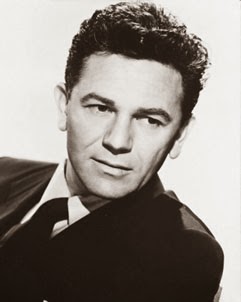
John Garfield: Hollywood Casualty

John Garfield, life snuffed out too soon

Humphrey Bogart, James Cagney and Edward G. Robinson were all well known actors remembered for their tough guy portrayals in Warner Brother's films of the 1930s and '40s.  Another name to add to that list is John Garfield, although he is little remembered today.

Garfield, an accomplished stage actor, is actually acknowledged as paving the way for Method actors, such as Montgomery Clift, Marlon Brando and James Dean. 
With Lana Turner in The Postman Always Rings Twice, 1946

Garfield's premature death was most likely caused by his blacklisting in Hollywood during the Communist scare. Although he was not a Communist, Garfiled knew some individuals, from his early theater days in New York, that were--including his wife, Roberta Seidman. 

Garfield had contracted scarlet fever as a child, and that sickness weakened his heart. He'd suffered two heart attacks prior his testimony before the U.S. Congressional House Committee on Un-American Activities.   
With Hazel Brooks in Body and Soul, 1947

Garfield denied Communist affiliation and refused to "name names." That ended his film career, and eventually his life.  Garfield died in 1952 at age 39, from a heart attack.

The only John Garfield film I've ever seen is The Postman Always Rings Twice, which is very steamy and excellent, by the way.  Have you ever seen any of John Garfield's films?

Thanks for visiting and have a great week!