Tuesday, November 29, 2011

Doris Day: Success Despite Tears


 Doris Day is releasing a new album this week entitled My Heart!   This is exciting news for all Doris Day fans because she's been out of the public eye for 17 years. 

I'm a fan, and Ms. Day is one of my favorite actresses.  She's an inspiration because her story is one of trials and perseverance.  She's also from my hometown, beautiful, historic Cincinnati! 

I'll thank you not to "dis" Cincinnati, please.  I've heard it all before...home of the Cincinnati Bungals, the Big Dead Machine, and Over The Rhine--once rated the worst neighborhood in the United States!

However, Cincinnati is home to several Hollywood legends.  Director Steven Spielberg was born there and actress Sarah Jessica Parker grew up in Cincinnati.  Dancer Vera-Ellen, singer Rosemary Clooney, and super star George Clooney all hail from the Cincinnati area.

But today, the spotlight is on Doris Day, actress, singer, dancer, super star! She could do it all, and as an actress, she could play dramatic roles, just as easily as comedic ones.  Add to that her pretty looks, svelte figure, magnificent legs, and presto--you have box office dynamite!

Despite her sunny, perky disposition, Ms. Day's road to stardom was filled with heartache and tragedy.  As a young teen, she had hopes of dancing professionally, and even won $500 in a contest with her amateur dance partner, Jerry Doherty.  But her dream to become a pro came to an end in 1937, when her leg was shattered in an automobile accident.  The car she was riding in was hit by a train.  However, while recovering, she started singing along with songs on the radio, and discovered a talent she didn't know she had.  Her mother paid for voice lessons from teacher Grace Raine, who said Doris had "tremendous potential."

Doris eventually sang on a local radio program, at a restaurant, and then went on to perform in the band of Cincinnati bandleader Barney Rapp (whose daughter Bonnie was my kindergarten teacher).  It was while performing in Rapp's band that she met trombonist Al Jorden.  She originally thought him a creep, but later fell in love and married him at the age of 17--he was 24.

Jorden abused Doris physically, cheated on her, and even insisted that she have an abortion when she became pregnant.  She kept the baby and later left Jorden.  Ironically, Doris's main ambition was to become a full time a wife and mother, not a super star.

As a single mom, she recorded "Sentimental Journey" in 1944, and that song made her a star.  A second marriage followed to saxophonist George Wiedler.  That marriage ended after less than eight months.  By this time Hollywood had noticed Doris, and Wiedler (not fond of her son, and already cheating on her) didn't want to be known as Mr. Doris Day.

By 1951, Doris was on her way to super stardom and had married her third husband, Marty Melcher.  But 17 years later, Melcher and his business partner squandered her $24 million dollar fortune.  Melcher died leaving Doris $400,000 in debt. He'd also contracted her to do a television sitcom, which she had no desire to do. But she did it anyway, and gave it her all.  The TV show saved her, and she was later awarded a court settlement after suing Melcher's business partner. 

The Doris Day Show was a success and ran from 1968 through 1973, which is how I first became acquainted with Doris Day when I was a kid.  Back then I had no idea of her tremendous talent.

Doris Day is the number one female box office star of all time, and she's the only one who was number one four years in a row! Her extensive body of work includes 39 films and 29 albums.  Today, she works as an animal rights activist.

 "Que Sera Sera" is known as her signature song, and she is a true example of that mantra, "whatever will be will be."  She has experienced numerous hardships in her career and personal life.  But she has endured and maintained a positive outlook.  "...I just feel so fortunate and so blessed to have been able to entertain people in the theatres and on record, it’s just an amazing life that I’ve experienced." – Doris Day

My favorite Doris Day film is Calamity Jane.  In it she sings the song "Secret Love," which won the Academy Award for best original song of 1953.  Last year I learned that Doris Day had had a real "secret love" when I read that she'd had an affair with Maury Wills.

Wills is the famous L.A. Dodger base stealer, and one of the first, post-Jackie Robinson African American integration baseball players.  According to Wills and a Day biographer, the affair took place in the early ‘60s.

I had known about another interracial relationship in Doris's life, but it involved her father. In her autobiography, Doris Day: Her Own Story, she talked about her father's dislike of blacks, yet, later in life, he married a black woman!

Interracial relationships are becoming more commonplace now, but black and white couples still tend to turn a few heads. These relationships no longer need to be kept secret, however, that was a different story not so long ago.  I've written about a secret love in The Governor's Sons. I hope you'll read it, then be thankful that times have changed, and then enjoy a Doris Day movie!

Thanks for stopping by!

Wednesday, October 26, 2011

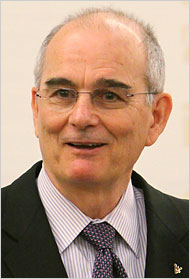
Dr. Gregory H. Williams: A Testament to the Power of Perseverance


 I've never met Dr. Gregory Williams, but I hope to one day.  He's the current president of the University of Cincinnati, one of the nation's top 25 public research universities.  Dr. Williams is a noted scholar with a vast background in academic leadership. Prior to his post as UC's President, he was the President of the City College of New York. 

Dr. Williams has worked in University Administration for over 30 years, holding positions at George Washington University and the University of Iowa.  In addition, he was Dean of Law School and Carter C. Kissell Professor of Law at The Ohio State University.

After I read Dr. Williams's memoir, Life on the Color Line , I was amazed that he was able to achieve as much as he has.  It's hard to believe that an individual with such an outstanding resume faced extraordinary challenges that would have destroyed most of us.

So, what made Dr. Williams's life so challenging? It wasn't a physical disability, nor was it the fact that he was a black youth in America during the '40s and 50's, although that was a large part of it.  If you're looking at his picture, you're probably surprised by his ethnicity!

His series of challenges began at age 10, when his parents divorced. Divorce is difficult for any child to endure. But imagine on top of that, learning your true identity.  Picture living a comfortable life as a white child, at the top of the food chain, so to speak, but then finding out that you're really, what in those days was referred to as a "Negro."  "I don't want to be a Negro," Dr. William's little brother Mike cried, "we can't go to the swimming pool and we can't go skating!" And that was just the beginning of their emotional readjustment to the dregs of society.

Dr. Willams and his brother left Virginia with their father, after their father divorced their white mother. From a decent life in Virginia (albeit with some issues), the elder Williams took his sons back to his home state of Indiana.  As a bi-racial man, Dr. Williams's father had passed as white.  He was known as Tony and claimed to be of Italian descent.  But back home, everyone knew Tony, now referred to as Buster, was black.  And being "Negro" inhibited employment opportunities.

The alcoholism of Dr. Williams's father caused a large amount of dysfunction, and his father's chronic unemployment prevented him from caring of his two boys.  Living from hand to mouth, they endured poverty and beatings.

In school, once Dr. Williams was singled out as black (even though he looked white), he faced rejection and ridicule from former friends, as well as hostility from teachers. And among some black students, he was shunned because of his fair complexion.

But despite the odds, Dr. Williams persevered because of an inner strength and desire to achieve.  He always wanted to be a lawyer and was never deterred from that goal.  What pushed him to achieve he said, is that every time he got discouraged, he would recall the first few months of living as an outsider among relatives in Indiana.  "I reminded myself that if I could make it through those days, all other obstacles could be overcome."

When I read Dr. Williams's memoir, I cried, then cried some more.  Now I'm tearing up as I write about it.  I'm a big believer in racial reconciliation, and I'm thankful that our country is on the mend.  But in reality, the racial divide cuts so deep, it may take another century for the wound to heal completely.

Anyone who doesn't understand the extent and complexity of racism in our nation needs to read Dr. Williams's book.  He had the unique opportunity to live as white, but then experienced the extreme culture shock of  black "reassignment."

"In spite of all the pain and grief of my early years," Dr. Williams says, "I am grateful to have been able to view the world from a place few men or women have stood...I am bound to live out my life in the middle of our society and hope that I can be a bridge between races, shouldering the heavy burden that almost destroyed my youth."

Dr. Williams succeeded in pursuing a master's degree, law degree and a doctorate.  He is a true testament to the power of perseverance!

I write stories of forbidden love from the past in which my characters persevere against the odds.  It amazes me that race is such a volatile issue, even today, where love is concerned.  But if two people love each other, they should be together, no matter what the cost.

When Dr. Williams became engaged to a white girl, let's just say...her family had some issues with that.  Read his memoir to find out what happened.  And read my book, The Governor's Sons, to see what transpires in 1936 when a young law student from a wealthy southern family falls in love with "the help."

Thanks for visiting!

Saturday, September 24, 2011

Why I'm Going Independent

I'm in the process of independently publishing my novels, and I'm very excited!  I'm researching the process now, but hope to have the ball rolling in the next few weeks.  This time last year, I never would have thought about self publishing, but now there are several reasons why I have: 

I first considered it seriously after interviewing author Norma Beishir.  Norma has been published traditionally as well as independently, and she's a huge advocate of self publishing because of the freedom it allows.

My cousin Dehbi, a voracious reader, has been encouraging me to self publish ever since she got a Kindle about a year ago.  "This is the new trend, you should do it!"  That's what she's been telling me, and the articles she's sent have helped me in my decision. More articles here.

Some authors have had extreme financial success in self publishing, such as Amanda Hocking and John Locke. Although exceptions to the rule, they certainly are an inspiration!

Many writers in my local RWA chapter are pursuing independent publishing, including Carey Corp.  I think Carey's recent articles about going indie finally helped me to stop straddling the fence and do it for real.  Thanks Carey!

When seeking agents, some ask for your publicity plan. When seeking epublishers, some require that you provide your own cover art.  Hmm...if I have to do my own publicity and artwork, maybe I should just do everything myself.

I love pretty covers, but I worried that I wouldn't be able to create anything that didn't look crappy or child like in design.  However, cover model Jimmy Thomas offers a great selection of romance images for a reasonable fee.  And Gimp software, similar to Photoshop, can be downloaded for free to jazz up those images!  BTW, I'm very nontechnical, so if I can make a cover with PowerPoint and doctor it up with Gimp, anybody can!

There are lots of other writers out there that write better than I do, and they're getting rejected, too!  Do I want my work to sit on a flash drive and continually get rejected, or do I want to take a chance and put it out there myself?  As the character Cal Hockley said in the movie Titanic, "A wise man makes his own luck." Hockley was the jerk Rose didn't marry, but regardless, I love that line!

If my stories can provide entertainment and earn income, as well, I'll be thrilled!

Have you considered going indie?

Monday, April 18, 2011

Moday's Writing Tip: Arrive Late, Leave Early


"Too many words..."
"Figure out what the action of the scene is going to be, or what its thrust is, and then start writing just a fraction before the action begins." Robert Masello, Robert's Rules of Writing, Rule 42: Make an Entrance

If you haven't guessed, Masello's Robert's Rules of Writing is one of my favorite craft books.  It's a small work jam packed with excellent advice!

I'm currently revising a WIP, and this rule reminds me that I don't need to fill up scenes with lots of superfluous information. 

Masello uses the example of a scene that takes place in a lecture hall.  Is it really necessary to show the students filing in, the professor straightening his notes at the podium, then clearing his throat and beginning the lecture?

Absolutely not!  If the oncoming conflict is an argument that takes place between the protagonist and the professor, that results in the protagonist getting kicked out of school, focus on that.

Masello says, "If that's what the scene is about, if that's what moves the action of your story forward, then come in just before the argument flares up and out of control.  And once the expulsion is given, end the scene...Lingering in that lecture hall will only dilute the power of the confrontation."

In closing, get to the point, and know when to quit.  Rambling and meandering is okay in a first draft, but while revising, cut what's possible so the reader won't be bored!

Friday, April 15, 2011

Recipe Friday: Pork Roast with Gravy

Here's something kid tested (by my children) and mother approved by me! It's also really easy to prepare and cooks in the crock pot.

I made this just the other day and served it with mashed sweet potatoes and brussel sprouts.  The recipe, from Reader's Digest, suggests serving it with mashed white potatoes. Rice would work well, too.  Hope you and your family enjoy this!

Pork Roast with Gravy

1 boneless whole pork loin, 3-4 lbs.
1 can chicken broth
1 cup julienned sweet red pepper
1/2 cup chopped onion
1/4 cup cider vinegar
2 T Worcestershire sauce
1T brown sugar
2 t Italian seasoning
1 t salt
1 t pepper
2 t cornstarch
2 t cold water

Cut roast in half, transfer to 5 qt. slow cooker.  In small bowl, combine broth, red pepper, onion, vinegar, Worcestershire sauce, brown sugar and seasonings.  Pour over pork.  Cover and cook on low 3-4 hours, or until meat thermometer reads 160 degrees and meat is tender. 

For gravy, strain cooking juices and skim fat.  Pour 1 cup into small saucepan. Combine corn starch and water until smooth.  Stir into cooking juices. Bring to a boil, cook and stir two minutes or until thickened.

Do you have a favorite pork roast recipe that your mom used to make? Thanks for visiting, and have a wonderful weekend!