Showing posts with label interracial love. Show all posts

Monday, June 3, 2024

Love Against the Odds

A few years ago, my friend Lisa recommended three movies that she knew I'd enjoy, all from different time periods. Two dealt with interracial love (one of my favorite topics), while the third was a May/December romance. 

Here's a brief summary of each film from IMDb:

All That Heaven Allows (1955): An upper-class widow falls in love with a much younger, down-to-earth nurseryman, much to the disapproval of her children and criticism of her country club peers.

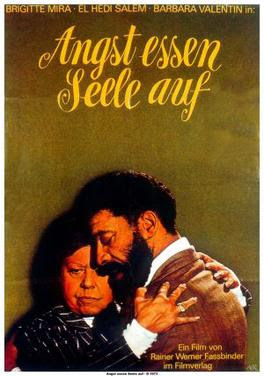
Ali: Fear Eats the Soul (1974)A lonely widow meets a much younger Arab worker in a bar during a rainstorm. They fall in love, to their own surprise-and to the outright shock of their families, colleagues, and drinking buddies.

Far From Heaven (2002): In 1950s Connecticut, a housewife faces a marital crisis and mounting racial tensions in the outside world.

I don't claim to be a movie reviewer, but I'll share my thoughts regarding each film. My favorite was the sappy melodrama All That Heaven Allows. Why? Because it had a happy ending!


All That Heaven Allows
 focused on socio-economic status and an older woman younger man relationship. I loved how the main character Carrie's detached/clinical social worker daughter couldn't handle the situation. Her WASP son wasn't any better. Ron, the love interest was a novelty to Carrie at first (a nice set of muscles, as her son said), and she was willing to let him go to keep her children's approval (and maybe that precious social status, too). But love conquered that in the end and they became equals who'd live a non-snobbish lifestyle. The doctor character was a voice of reason and support for Carrie, so that was refreshing.

Ali:Fear Eats the Soul was fascinating. It was interesting to see how the issue racism and ethnicity was addressed in Europe at that time. Also, the relationship of a much, much older (and not very attractive) woman and a younger man was intriguing. When the main character Emmi falls in love with Ali, she loses everything. It's even mentioned that she's not really even German because she has a Polish last name. Her children, neighbors, and workmates offer her no support and are quite cruel. Though this is difficult for Emmi, Ali is too important to her and she won't end their relationship. 

After they return from a long vacation, Emmi is accepted back by her community because of what she can (monetarily) offer. She even participates in alienating a new co-worker from Yugoslavia. With her place restored, she wants to change Ali, perhaps assimilate him. At this point, he seems like more of a possession (and a nice set of muscles), and not an equal. He eventually becomes an equal in their relationship, but that doesn't happen until after she drives him into another woman's arms. Though I was happy Emmi and Ali reunited, I was saddened when she told him he had her permission to stray. The stomach ulcer told Ali's story. The discrimination and rejection he faced ate away at his soul. The landlord's son was supportive of their relationship early on, so that was nice to see.

Far From Heaven
 (inspired by the other two movies mentioned above) was a really hard hitting film! No age issue, just Yankee racism. NO happy ending here or even a supportive character, aside from perhaps the maid. This movie portrayed the ultimate relationship (black man/white woman) where no lines could be crossed in 1950s America! 

Frank, the gay husband, is a fascinating angle. And when he hears talk of his wife, Cathy, being seen with a black man, he blows quite the gasket! He'd worked so hard at establishing the perfect life for his family (and hiding his gay affairs) and she was destined to destroy all he'd accomplished. Cathy has to lie about her excursion with Raymond, her black gardener. And though nothing transpires between them, when she does open up to her best friend, Eleanor, about her feelings of just thinking about him, Eleanor drops her as a friend. 

Raymond seems to be a secret desire, one left hidden and best not discussed. He is a fantasy, something Cathy longs for, but knows she can never have. And knowing he feels the same and desires her makes it all the more heart-wrenching, especially after watching her live with an alcoholic husband who doesn't really love or desire her. The ending is sad, but realistic.  

Have you seen any of these movies? If so, do you have any thoughts to share? Thanks for visiting and have a great week! 

Monday, June 12, 2023

Passing Strange: Not Your Ordinary Love Story

I love exploring tales of forbidden love, and one of the most interesting I've ever read about was that of Clarence King and Ada Copeland.  Their story is told in Martha A. Sandweiss's book, Passing Strange.

Clarence King is a hero of nineteenth century western history.  He was also a brilliant scientist, best-selling author and architect of the great surveys that mapped the West after the Civil War. Secretary of State John Hay declared King “the best and brightest of his generation.”

However, King hid a secret from his friends, as well as the prominent Newport family from which he hailed:  He lived a double life.  For thirteen years King was known  as a celebrated white explorer, geologist and writer.  But he was also known as James Todd, a black Pullman porter and steel worker.

The fair skinned blue-eyed son born to a wealthy China trader passed across the color line.  This was not the usual case of a black man passing as white--but a white man passing as black!  And he didn't reveal his secret  to his black common-law wife, Ada Copeland, until his dying day.

Why did King do this?  To be with the woman he loved.  To marry Ada publicly, as the white man Clarence King, would have scandalized him and destroyed his career.

Passing Strange is a fascinating account of a sacrifice made for love.  If you like history, romance and forbidden love stories, then you'll enjoy Passing Strange!

Can you share a rather strange love story you've heard about?

Thanks for visiting and have a great week! 

Monday, March 6, 2023

Love Across the Color and the Money Lines

My latest novel, One Family Now, deals with love across the color line, as well as the socioeconomic line. 

Unsuspecting Jessica Leigh, a poor black girl from a disadvantaged family, believes wealthy college student Geoff Worth to be her knight in shining armor. Yet with no explanation, he ends their relationship, leaving her shattered and pregnant.

Twenty-six years later, Jessica and Geoff rediscover each other because their sons become friends by chance. Eager to mend their relationship and start afresh, Geoff reveals the ugly truth surrounding their past. Because she was deemed an unsuitable match by his powerful political WASP family, Geoff was forced to end his relationship with Jessica to prevent her from falling victim to a deadly “accident.”

Though their passion reignites, Geoff’s explanation of what transpired over two decades earlier is ignored by Jessica’s over-protective sister. She suspects Geoff’s family of being responsible for their father’s murder. Geoff’s mother refuses to accept Jessica because of a past scandal. And the two sons, once friends, find themselves pitted against each other as enemies once their relationship as half-brothers is divulged. As Jessica and Geoff examine the intersections of their parents’ lives, they uncover a history checkered with adultery, bribery and rumors of murder. How can Geoff and Jessica be together without losing their families?

Please consider giving it a read here.

With that bit of shameless self-promotion out of the way, I'll move on to today's post, which also deals with love across the color and socioeconomic lines. 

I'm a big fan of interracial love stories. But as with all love stories, sometimes things go wrong, as in the case of Alice Jones, a domestic whose father was a "colored man" and Kip Rhinelander, a rich white man. 

Here's a brief overview of the story, courtesy of Wikipedia:

In 1921, Leonard Kip Rhinelander, a member of a socially prominent wealthy New York family, began a romance with Alice Beatrice Jones, a domestic. The two met during Rhinelander's stay at the Orchard School in Stamford, Connecticut, an inpatient clinic where he was seeking treatment for extreme shyness and stuttering. 

They had a three-year romance before marrying at the New Rochelle, New York courthouse in October of 1924, not long after Rhinelander turned 21. The couple moved in with Jones' parents in Pelham Manor. Although Rhinelander didn't tell his family about the marriage, he continued to work at Rhinelander Real Estate Company.

The couple tried to keep their marriage secret, but news of it was soon announced by the press. Because of the Rhinelanders' wealth and social position, New Rochelle reporters wanted to learn about Jones' background. After they began investigating, reporters discovered that Jones was the daughter of English immigrants and her father, George, was a "colored man". 

At first, Rhinelander stood by his wife during the scathing national coverage of their marriage. But after two weeks, he gave in to his family's demands to leave Jones.  He signed an annulment complaint that his father's lawyers had prepared. The document claimed that Jones had deceived Rhinelander by hiding her true race and passing herself off as a white woman. Jones denied this stating that her race was obvious. Rhinelander later said that Jones hadn't deceived him outright but did so by letting him believe she was white.

Sad story, and it only gets worse.  To see how it ends, check out the article by Theodore Johnson III,
When One Of New York's Glitterati Married A 'Quadroon'.

I'd read about this case before, had you ever heard about it?

Thanks for visiting and have a great week!

Monday, February 14, 2022

How Did You Meet the Love of Your Life?

Happy Valentine's Day! Ah, February, the month of love. If you're a romantic like me, I'm sure you enjoy reading about how people met and fell in love.  My story sounds like fiction, but it really happened!  I’ll share in a moment, but it wasn’t until after I got married that I became an author, and my marriage is what inspired me to begin writing in the first place.


I create tales of forbidden love, and my next book, Escape, due out this spring, is a story about a slave girl who is helped to escape from bondage by a young abolitionist who falls in love with her.  I came up with the story idea when I began thinking about how sad it would have been if my husband and I had fallen in love 200 years earlier.  Then, we wouldn’t have been able to marry, because he’s white, and I’m black.

Interracial love isn’t forbidden nowadays, but sometimes it still tends to be a sticky topic, so let me tell you how I met my husband. 

I started running in 1993.  It was a little hard at first, but I finally built up my endurance.  After a few months I was running 5-7 miles every day after work.  About a year later, my future husband Richard, noticed me.

But he’d only see me one day a week, and that was Thursday mornings, when my work schedule (as a librarian) was 12 noon to 9 p.m.  On those days I’d run at 7 a.m.  He couldn’t figure out where I’d come from, and he’d only see me sporadically.

Then one Friday evening during the summer, Richard was on his way to meet friend.  He saw me running and took that opportunity to pull over his car and talk to me. “Excuse me,” he said.

I assumed he needed directions, but instead Richard said, “I’ve seen you running.”  Well at that remark, I figured he was some know it all jock who wanted to tell me my technique was all wrong.  I was prepared to thank him and be on my way.  I’d read Jim Fixx’s book on running, and I knew all I needed to know about running (Jim Fixx died while running, so we won’t go there).  The next thing Richard said caught me completely off guard.  “I just want to tell you that I think you’re extremely attractive, and I want to ask you to lunch.”

The eyes are the mirror to the soul.  Richard has beautiful green eyes and they look honest, plus he’s handsome (okay, he's hot) and having just met him, he seemed like a genuinely nice person (and he is).  But despite all this I joked, “Okay, as long as you’re not a rapist or an ax murderer."  He adamantly assured me that he wasn’t.

After two dates, we really liked each other.  His mother, who lived three hours away, asked what I looked like.  To this Richard replied, “She’s an—extreme brunette,” and left it at that.

We met in July, and by September we were talking about getting married.  Now, around this time, he’d gotten information about his 10th high school reunion and he’d invited me to go. This meant I’d get to meet his parents.  However, he still hadn’t told them everything about me, like that I’m black, for instance.

So, unbeknown to me, the day before we were to arrive, Richard called his parents. “By the way,” he said, “More than just Maria’s hair is extreme brunette—she’s black.”  I’m sure there were a few long moments of stunned silence, but whatever else he said must have put their minds at ease, because our first meeting was a very pleasant one!

Richard and I met in July of 1994 and married in July of 1995.  In addition to a wonderful husband and two amazing kids, my interracial marriage has given me a brand new career as a writer!

How did you meet the love of your life? Thanks for visiting and have a great week!

Monday, November 9, 2020

Love Against the Odds

Not long ago, my friend Lisa recommended three movies that she knew I'd enjoy, all from different time periods. Two dealt with interracial love (one of my favorite topics), while the third was a May/December romance. 

Here's a brief summary of each film from IMDb:

All That Heaven Allows (1955): An upper-class widow falls in love with a much younger, down-to-earth nurseryman, much to the disapproval of her children and criticism of her country club peers.

Ali: Fear Eats the Soul (1974)A lonely widow meets a much younger Arab worker in a bar during a rainstorm. They fall in love, to their own surprise-and to the outright shock of their families, colleagues, and drinking buddies.

Far From Heaven (2002): In 1950s Connecticut, a housewife faces a marital crisis and mounting racial tensions in the outside world.

I don't claim to be a movie reviewer, but I'll share my thoughts regarding each film. My favorite was the sappy melodrama All That Heaven Allows. Why? Because it had a happy ending!

All That Heaven Allows
focused on socio-economic status and an older woman younger man relationship. I loved how the main character Carrie's detached/clinical social worker daughter couldn't handle the situation. Her WASP son wasn't any better. Ron, the love interest was a novelty to Carrie at first (a nice set of muscles, as her son said), and she was willing to let him go to keep her children's approval (and maybe that precious social status, too). But love conquered that in the end and they became equals who'd live a non-snobbish lifestyle. The doctor character was a voice of reason and support for Carrie, so that was refreshing.

Ali:Fear Eats the Soul was fascinating. It was interesting to see how the issue racism and ethnicity was addressed in Europe at that time. Also, the relationship of a much, much older (and not very attractive) woman and a younger man was intriguing. When the main character Emmi falls in love with Ali, she loses everything. It's even mentioned that she's not really even German because she has a Polish last name. Her children, neighbors, and workmates offer her no support and are quite cruel. Though this is difficult for Emmi, Ali is too important to her and she won't end their relationship. 

After they return from a long vacation, Emmi is accepted back by her community because of what she can (monetarily) offer. She even participates in alienating a new co-worker from Yugoslavia. With her place restored, she wants to change Ali, perhaps assimilate him. At this point, he seems like more of a possession (and a nice set of muscles), and not an equal. He eventually becomes an equal in their relationship, but that doesn't happen until after she drives him into another woman's arms. Though I was happy Emmi and Ali reunited, I was saddened when she told him he had her permission to stray. The stomach ulcer told Ali's story. The discrimination and rejection he faced ate away at his soul. The landlord's son was supportive of their relationship early on, so that was nice to see.

Far From Heaven
 (inspired by the other two movies mentioned above) was a really hard hitting film! No age issue, just Yankee racism. NO happy ending here or even a supportive character, aside from perhaps the maid. This movie portrayed the ultimate relationship (black man/white woman) where no lines could be crossed in 1950s America! 

Frank, the gay husband, is a fascinating angle. And when he hears talk of his wife, Cathy, being seen with a black man, he blows quite the gasket! He'd worked so hard at establishing the perfect life for his family (and hiding his gay affairs) and she was destined to destroy all he'd accomplished. Cathy has to lie about her excursion with Raymond, her black gardener. And though nothing transpires between them, when she does open up to her best friend, Eleanor, about her feelings of just thinking about him, Eleanor drops her as a friend. 

Raymond seems to be a secret desire, one left hidden and best not discussed. He is a fantasy, something Cathy longs for, but knows she can never have. And knowing he feels the same and desires her makes it all the more heart-wrenching, especially after watching her live with an alcoholic husband who doesn't really love or desire her. The ending is sad, but realistic.  

Have you seen any of these movies? If so, do you have any thoughts to share? Thanks for visiting and have a great week!

Monday, January 6, 2020

Interracial Love Gone Wrong

I'm a big fan of interracial love stories. But as with all love stories, sometimes things go wrong, as in the case of Alice Jones and Kip Rhinelander.

Here's a brief overview of the story, courtesy of Wikipedia:

In 1921, Leonard Kip Rhinelander, a member of a socially prominent wealthy New York family, began a romance with Alice Beatrice Jones, a domestic. The two met during Rhinelander's stay at the Orchard School in Stamford, Connecticut, an inpatient clinic where he was seeking treatment for extreme shyness and stuttering. 

They had a three-year romance before marrying at the New Rochelle, New York courthouse in October of 1924, not long after Rhinelander turned 21. The couple moved in with Jones' parents in Pelham Manor. Although Rhinelander didn't tell his family about the marriage, he continued to work at Rhinelander Real Estate Company.

The couple tried to keep their marriage secret, but news of it was soon announced by the press. Because of the Rhinelanders' wealth and social position, New Rochelle reporters wanted to learn about Jones' background. After they began investigating, reporters discovered that Jones was the daughter of English immigrants and her father, George, was a "colored man". 

At first, Rhinelander stood by his wife during the scathing national coverage of their marriage. But after two weeks, he gave in to his family's demands to leave Jones.  He signed an annulment complaint that his father's lawyers had prepared. The document claimed that Jones had deceived Rhinelander by hiding her true race and passing herself off as a white woman. Jones denied this stating that her race was obvious. Rhinelander later said that Jones hadn't deceived him outright but did so by letting him believe she was white.

Sad story, and it only gets worse.  To see how it ends, check out the article by Theodore Johnson III,
When One Of New York's Glitterati Married A 'Quadroon'.

I'd read about this case before, had you ever heard about it?

Thanks for visiting and have a great week!

Monday, October 2, 2017

Love is Color Blind But Our Families Weren't

I enjoy interracial love stories, so I thought I'd post this touching one from The UK Daily Mail :

Mary, 81, is married to Jake, 86, and lives in Solihull in the West Midlands. They have no children. Mary is a former deputy head teacher, and Jake worked for the post office before retiring. Mary is white and Jake is black, originally from Trinidad.

MARY SAYS: When I told my father I was going to marry Jake he said, ‘If you marry that man you will never set foot in this house again.’

He was horrified that I could contemplate marrying a black man, and I soon learned that most people felt the same way. The first years of our marriage living in Birmingham were hell — I cried every day, and barely ate. No one would speak to us, we couldn’t find anywhere to live because no one would rent to a black man, and we had no money.


Love against the odds: Mary's father threw her out when she decided to marry Jake in 1948, left. Decades on, they couldn't be happier together

People would point at us in the street. Then I gave birth to a stillborn son at eight months. It wasn’t related to the stress I was under but it broke my heart, and we never had any more children.

Now it’s very hard to comprehend the prejudice we encountered, but you have to remember that there were hardly any black people in Britain in the Forties. I met Jake when he came over during the war from Trinidad, as part of the American forces stationed at the Burtonwood base near my home in Lancashire. We were at the same technical college. I was having typing and shorthand lessons and he’d been sent there for training by the Air Force. He was with a group of black friends and they called my friend and me over to talk. We didn’t even know they spoke English, but Jake and I got chatting. He quoted Shakespeare to me, which I loved.

A few weeks later we went for a picnic, but were spotted by a lady cycling past — two English girls with a group of black men was very shocking — and she reported me to my father, who banned me from seeing him again.

Jake returned to Trinidad, but we carried on writing to each other, and a few years later he returned to the UK to get better paid work.

He asked me to marry him, quite out of the blue, when I was only 19. My father threw me out, and I left with only one small suitcase to my name. No family came to our register office wedding in 1948.

But gradually life became easier. I got teaching jobs, ending up as a deputy head teacher. First Jake worked in a factory, then for the Post Office.

Slowly we made friends together, but it was so hard. I used to say to new friends: ‘Look, I have to tell you this before I invite you to my home — my husband is black.’

My father died when I was 30 and although we were reconciled by then, he never did approve of Jake.

Today we have been married for 63 years, and are still very much in love. I do not regret marrying him for an instant, despite all the pain we have suffered.

JAKE SAYS: I feel so fortunate to have met and married Mary, but it saddens me that we could not be accepted by society. Nowadays I say to young black people: ‘You have no idea what it used to be like.’

When I arrived in the UK I was subjected to abuse every day. Once I was on a bus and a man rubbed his hands on my neck and said: ‘I wanted to see if the dirt would come off.’

And back then you couldn’t work in an office — because a black man in an office with all the white girls wasn’t thought to be safe.

Any thoughts? Thanks for visiting and have a great week!


Monday, June 9, 2014

Interracial Love Gone Wrong

My friend Lisa sent me a link to this fascinating article about Alice Jones and Kip Rhinelander. What an interesting topic to blog about, especially since my soon to be released novel, Revelation, deals with a woman who hides the secret of a black grandparent.

Here's a brief overview of the story, courtesy of Wikipedia:

In 1921, Leonard Kip Rhinelander, a member of a socially prominent wealthy New York family, began a romance with Alice Beatrice Jones, a domestic. The two met during Rhinelander's stay at the Orchard School in Stamford, Connecticut, an inpatient clinic where he was seeking treatment for extreme shyness and stuttering. 

They had a three-year romance before marrying at the New Rochelle, New York courthouse in October of 1924, not long after Rhinelander turned 21. The couple moved in with Jones' parents in Pelham Manor. Although Rhinelander didn't tell his family about the marriage, he continued to work at Rhinelander Real Estate Company.

The couple tried to keep their marriage secret, but news of it was soon announced by the press. Because of the Rhinelanders' wealth and social position, New Rochelle reporters wanted to learn about Jones' background. After they began investigating, reporters discovered that Jones was the daughter of English immigrants and her father, George, was a "colored man". 

At first, Rhinelander stood by his wife during the scathing national coverage of their marriage. But after two weeks, he gave in to his family's demands to leave Jones.  He signed an annulment complaint that his father's lawyers had prepared. The document claimed that Jones had deceived Rhinelander by hiding her true race and passing herself off as a white woman. Jones denied this stating that her race was obvious. Rhinelander later said that Jones hadn't deceived him outright but did so by letting him believe she was white.

Sad story, and it only gets worse.  To see how it ends, check out the article by Theodore Johnson III,
When One Of New York's Glitterati Married A 'Quadroon'.

I'd read about this case before, had you ever heard about it?

Thanks for visiting and have a great week!

Monday, March 26, 2012

Passing Strange: Not Your Ordinary Love Story

I love exploring tales of forbidden love, and one of the most interesting I've ever read about was that of Clarence King and Ada Copeland.  Their story is told in Martha A. Sandweiss's book, Passing Strange.

Clarence King is a hero of nineteenth century western history.  He was also a brilliant scientist, best-selling author and architect of the great surveys that mapped the West after the Civil War. Secretary of State John Hay declared King “the best and brightest of his generation.”

However, King hid a secret from his friends, as well as the prominent Newport family from which he hailed:  He lived a double life.  For thirteen years King was known  as a celebrated white explorer, geologist and writer.  But he was also known as James Todd, a black Pullman porter and steel worker.

The fair skinned blue-eyed son born to a wealthy China trader passed across the color line.  This was not the usual case of a black man passing as white--but a white man passing as black!  And he didn't reveal his secret  to his black common-law wife, Ada Copeland, until his dying day.

Why did King do this?  To be with the woman he loved.  To marry Ada publicly, as the white man Clarence King, would have scandalized him and destroyed his career.

Passing Strange is a fascinating account of a sacrifice made for love.  If you like history, romance and forbidden love stories, then you'll enjoy Passing Strange!

Can you share a rather strange love story you've heard about?

Thanks for visiting!  BTW, the release date of my new novel, Escape, will be sometime in late April!  And if you haven't read my forbidden love story, The Governor's Sons, be sure to check it out


Monday, February 27, 2012

How Strom Thurmond Influenced Me

Ol' Strom
I know what you're thinking! How could a dead segregationist governor influence some black woman? Well, let me explain.

About four years ago I read Dear Senator, a memoir by Essie Mae Washington-Williams.  Ms. Williams is the African American love child of the South Carolina Senator (and former Governor) and his family's African American maid, Carrie Washington.

My mother is from South Carolina, so all my life I've had ties to the South, and for many years I've known about this "secret child." My mother even knew someone who went to college with her.  So when I'd heard that Ms. Williams had "come out" and written a memoir, I couldn't wait to read it!

The story of Ms. Williams's mother and her relationship with Thurmond was heartbreaking and touching, as well as fascinating.  I couldn't stop reading.  And after I'd finished, I couldn't get the story out of my head.

I kept thinking, what would have happened if Ms. Williams had been born a boy who grew up to become a Civil Rights leader at the same time his father was a segregationist governor.  And another thought was, what if Thurmond, a young law student at the time, had been willing to give up everything to be Carrie Washington?

If you're familiar with my blog, you know that Dear Senator inspired my novel The Governor's Sons.  Ms. Williams's memoir, however, is quite sad.  Her mother was all of sixteen when she became pregnant by the then twenty three year old Thurmond.

Thurmond did care for Carrie, but not to the point of giving up everything for her, and their affair lasted over several years, off and on.  But when she died, Thurmond didn't know until Essie told him.

Thurmond provided financially for his love child and stayed in contact with her all of his life.  Ms. Williams still maintains contact with his family--which is her family too!  I couldn't help but feel for both of them (Essie Mae and Strom) as I read her story.

Thurmond wanted to do the right thing by providing for his daughter and being a presence in her life. But if the truth about her had ever been discovered by the public, his career would have been destroyed.  And Ms. Williams had to settle for what little of himself her father could give her, while he shared the limelight with his wife and their children.

If you're at all interested in race matters and love stories, I highly recommend Dear Senator!

Had you ever heard of Essie Mae Washington-Williams's story before the news broke about it a few years back?

Thanks for visiting!

Monday, February 13, 2012

Love, Love, Love The Lovings!

Mildred and Richard Loving
Tomorrow is Valentines Day and HBO is airing The Loving Story.  This documentary film tells the story of Richard and Mildred Loving, and also examines the current state of interracial marriage and its tolerance in the United States.
When I first read about the Lovings several years ago, I thought what a fitting (and ironic) name for them!
Richard Loving was white, and his wife, Mildred, black. In 1958, since they couldn’t marry in their home state of Virginia where interracial marriage was banned, they went to Washington, D.C. where they could legally wed.  However, upon returning home as a married couple, they were arrested, jailed and banished from the state for 25 years for violating Virginia’s Racial Integrity Act.
The Lovings agreed to leave Virginia and relocated to Washington. By doing this they avoided jail time. But after living there for five years and having three children, they missed family and friends and wanted to return home to Caroline County, Virginia. 
Around this time they contacted Bernard Cohen, an attorney volunteering at the ACLU, to request that he ask the Caroline County judge to reconsider his decision.
Cohen and another lawyer challenged the Lovings' conviction, but the original judge in the case, Leon Bazile, upheld his ruling claiming: "Almighty God created the races white, black, yellow, Malay and red, and he placed them on separate continents. ... The fact that he separated the races shows that he did not intend for the races to mix."
The case moved all the way up to the Supreme Court where Cohen made this argument:
"The Lovings have the right to go to sleep at night knowing that if should they not wake in the morning, their children would have the right to inherit from them. They have the right to be secure in knowing that, if they go to sleep and do not wake in the morning, that one of them, a survivor of them, has the right to Social Security benefits. All of these are denied to them, and they will not be denied to them if the whole anti-miscegenistic scheme of Virginia... [is] found unconstitutional." 
After the ruling, in their favor (now known as the "Loving Decision") they returned home to Caroline County.
A happy ending to now what seems an unbelievable story—and believe it or not, they were arrested in the privacy of their bedroom during the middle of the night!
Had you ever heard of the Lovings' story? 
Thanks for visiting, and Happy Valentine's Day!

Monday, February 6, 2012

How Did You Meet the Love of Your Life?

It’s February, the month of love, and I enjoy reading about how people met and fell in love.  My story sounds like fiction, but it really happened!  I’ll share in a moment, but it wasn’t until after I got married that I became an author, and my marriage is what inspired me to begin writing in the first place.

I create tales of forbidden love, and my next book, Escape, due out this spring, is a story about a slave girl who is helped to escape from bondage by a young abolitionist who falls in love with her.  I came up with the story idea when I began thinking about how sad it would have been if my husband and I  had fallen in love 200 years earlier.  Then, we wouldn’t have been able to marry, because he’s white, and I’m black.

Interracial love isn’t forbidden nowadays, but sometimes it still tends to be a sticky topic, so let me tell you how I met my husband. 

I started running in 1993.  It was a little hard at first, but I finally built up my endurance.  After a few months I was running 5-7 miles every day after work.  About a year later, my future husband Richard, noticed me.

But he’d only see me one day a week, and that was Thursday mornings, when my work schedule (as a librarian) was 12 noon to 9 p.m.  On those days I’d run at 7 a.m.  He couldn’t figure out where I’d come from, and he’d only see me sporadically.

Then one Friday evening during the summer, Richard was on his way to meet friend.  He saw me running and took that opportunity to pull over his car and talk to me. “Excuse me,” he said.

I assumed he needed directions, but instead Richard said, “I’ve seen you running.”  Well at that remark, I figured he was some know it all jock who wanted to tell me my technique was all wrong.  I was prepared to thank him and be on my way.  I’d read Jim Fixx’s book on running, and I knew all I needed to know about running (Jim Fixx died while running, so we won’t go there).  The next thing Richard said caught me completely off guard.  “I just want to tell you that I think you’re extremely attractive, and I want to ask you to lunch.”

The eyes are the mirror to the soul.  Richard has beautiful green eyes and they look honest, plus he’s handsome (okay, he's hot) and having just met him, he seemed like a genuinely nice person (and he is).  But despite all this I joked, “Okay, as long as you’re not a rapist or an ax murderer."  He adamantly assured me that he wasn’t.

After two dates, we really liked each other.  His mother, who lived three hours away, asked what I looked like.  To this Richard replied, “She’s an—extreme brunette,” and left it at that.

We met in July, and by September we were talking about getting married.  Now, around this time, he’d gotten information about his 10th high school reunion and he’d invited me to go. This meant I’d get to meet his parents.  However, he still hadn’t told them everything about me, like that I’m black, for instance.

So, unbeknown to me, the day before we were to arrive, Richard called his parents. “By the way,” he said, “More than just Maria’s hair is extreme brunette—she’s black.”  I’m sure there were a few long moments of stunned silence, but whatever else he said must have put their minds at ease, because our first meeting was a very pleasant one!

Richard and I met in July of 1994 and married in July of 1995.  In addition to a wonderful husband and two amazing kids, my interracial marriage has given me a brand new career as a writer!

How did you meet the love of your life?

If you enjoy forbidden love stories--and want to participate in the Brother Can You Spare Sequel Contest--be sure to purchase a copy of The Governor’s Sons:

Twenty-three year old Ash Kroth comes from an old southern family of wealth and prestige. It is 1936, but despite this, and his driven political ambition to one day become governor, Ash recklessly pursues beautiful "Negro" college student Kitty Wilkes. Ash's life is forever changed because of Kitty, and 30 years later, as a segregationist governor, he must confront the consequences of his love for her.

Thanks for visiting!

Wednesday, November 3, 2010

Interracial Love: Conflict Supreme

Guess Who's Coming to Dinner
Over the weekend, I had the pleasure of being interviewed by Denise Turney on her Off The Shelf Radio program. We discussed interracial relationships, which is what I focus on in my novels. You can click to here for a link to the interview.

Talking with Denise brought this blog post to mind that I wrote back in November of 2010. If you missed it the first time around, hope you'll enjoy it today!

"Love is composed of a single soul inhabiting two bodies." Aristotle

Who doesn't love a good love story? But what drives one to make it great? Conflict!
And when you throw an interracial element into the mix (pun intended) you have an intensely compelling and emotionally volatile story.

Several films address this topic including, Come See the Paradise (Japanese/white American), Guess Who's Coming to Dinner (white/black American), Mississippi Masala (Asian Indian/ Black American), Something New and Jungle Fever (both white/black American).

Othello
Throughout history, interracial love has been a topic of great literature. In Shakespeare's Othello, a Moor is married to Venetian, Desdemona. Here racism is seen as Iago schemes to break up their marriage. Hoping to spur Desdemona's father Brabantino to annul the union, Iago tells him "an old black ram is tupping your white ewe."

In Harriet Beecher Stowe's Uncle Tom's Cabin, the slave Cassie is repeatedly raped by her master Simon Legree.  But she's also been in a previous relationship with her former master, who she loved. "I became his willingly, for I loved him!" Cassie says in chapter 34.

Sinclair Lewis's Kingsblood Royal tells the story of a bigoted character who discovers he has a small percentage of African blood, then falls in love with a black friend named Sophie.  When he held her hand, it was "warmer than any hand he had ever known," and when she kissed him, "he had not known a kiss like that..."  For more interracial love in literature, see Doug Poe's post on Interracial Sex in Classic Literature here.

Out of all multicultural combinations, perhaps the most explosive in our country is black and white. Make it a love story in the American South of the past--and POW!

Something New
I'm black, and my husband is white, but many years ago I began to think how sad it would've been if we'd lived a century earlier. Back then, we couldn't have married. That thought inspired me to write my first novel, Escape, about the abolitionist son of a wealthy merchant who falls in love with a slave he helps to escape.

After reading Essie Mae Washington Williams's memoir Dear Senator, I wrote my second novel, The Governor's Sons. Ms. Williams's memoir told of her black mother's love affair with her white father, future South Carolina Governor Strom Thurmond.  In my novel, a rich white law student plans to sacrifice everything and move overseas for the black woman he loves.

All through our country's history, interracial love has ignited conflict.  Forbidden Fruit by Betty DeRamus and  Martha Hodes's WhiteWomen, Black Men are two fascinating non-fiction accounts on the subject.

The topic of Sally Hemings, Thomas Jefferson's black mistress, was swept under the rug by history, and Jefferson's white descendants, until DNA tests revealed that her descendants, were Jefferson's as well.

Although there was an enormous amount of rape and exploitation of black women by white men in the United States (especially the South), there was also love.

If a plantation owner chose a slave as his "wife" and actually lived with her, he'd become an outcast from the community.  To prevent being ostracized, some white men, assuming the facade of bachelors to friends and family, would set up separate housing and provide financially for their black "wives" and children. And then there were those white men who chose to have two families, one white and the other black, hidden away in the shadows.

Thank goodness it's a different time!  Although still a touchy topic among both the black and white communities, at least as human beings we can freely love whomever we fall in love with.  As the old cliche goes, "love has no color."

Do you know of an interracial love story to share?

Thanks for visiting and have a great week!