Showing posts with label passing. Show all posts

Monday, May 13, 2024

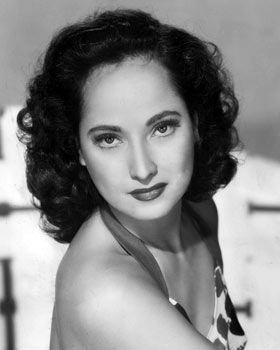
Merle Oberon's Secret

One of my favorite movies is the 1939 film version of Wuthering Heights, starring the extraordinarily beautiful Merle Oberon, a talented actress during the 1930s and '40s.

Yesterday was Mother's Day and I enjoyed spending time with my mother, as I'm sure most of us did who are still fortunate enough to have our mothers. That said, I find it sad the way Miss Oberon treated her own mother--her dark skinned mother--by passing her off as a servant. Throughout her lifetime, Merle Oberon kept her ethnic origin a secret.

 About.com says "Merle Oberon earned an Oscar nod for her acting in 1935’s “The Dark Angel” and more recognition for playing Cathy in 1939’s Wuthering Heights. But off screen, Oberon feared that her secrets would be exposed. She wasn’t solely white nor was she born in Tasmania like actor Errol Flynn, as she told people. Actually, she was born in India to an Indian mother and an Anglo father. Rather than disown her mother, though, Oberon passed her off as a servant. When the actress visited Tasmania later in life, the press hounded her for details about her upbringing, forcing her to admit that she wasn't born there. Still, Oberon did not confess to being Indian."

For a more in depth look into Merle Oberon's life and deceit regarding her origins, check out this article about the 2002 documentary "The Trouble with Merle".

Have you seen any of Merle Oberon's movies?

Thanks for visiting and have a great week! 

Monday, June 12, 2023

Passing Strange: Not Your Ordinary Love Story

I love exploring tales of forbidden love, and one of the most interesting I've ever read about was that of Clarence King and Ada Copeland.  Their story is told in Martha A. Sandweiss's book, Passing Strange.

Clarence King is a hero of nineteenth century western history.  He was also a brilliant scientist, best-selling author and architect of the great surveys that mapped the West after the Civil War. Secretary of State John Hay declared King “the best and brightest of his generation.”

However, King hid a secret from his friends, as well as the prominent Newport family from which he hailed:  He lived a double life.  For thirteen years King was known  as a celebrated white explorer, geologist and writer.  But he was also known as James Todd, a black Pullman porter and steel worker.

The fair skinned blue-eyed son born to a wealthy China trader passed across the color line.  This was not the usual case of a black man passing as white--but a white man passing as black!  And he didn't reveal his secret  to his black common-law wife, Ada Copeland, until his dying day.

Why did King do this?  To be with the woman he loved.  To marry Ada publicly, as the white man Clarence King, would have scandalized him and destroyed his career.

Passing Strange is a fascinating account of a sacrifice made for love.  If you like history, romance and forbidden love stories, then you'll enjoy Passing Strange!

Can you share a rather strange love story you've heard about?

Thanks for visiting and have a great week! 

Tuesday, May 9, 2023

Fredi Washington: Didn't Live an Imitation of Life

Fredi Washington
Mother's Day is this Sunday and just I happened to think about a heartbreaking movie involving a mother. If you have ever seen Imitation of Life, you'll understand what I'm talking about, since it revolves around the theme of passing.

Most white people who have ever heard of the term "passing," and know what it means, and have most likely seen that film. 

Several years ago, my husband, who's white, watched the 1959 version with me.  He was fascinated by the subject matter and impressed that Imitation of Life had been made back in the 1950s.

I told him that this was the second version, and that the original had been produced in 1934.  In that movie, I informed him, a "real black girl" played the part of Peola, the light skinned daughter desperate to pass as white who rejects her black mother. (In the 1959 movie, the daughter's name is Sarah Jane and she's played by white actress Susan Kohner). If you're not familiar with Imitation of Life, based on the 1933 Fannie Hurst novel of the same name, click here.

The real black girl mentioned above was Fredi Washington, an accomplished African American dramatic actress during the 1920s and '30s.  Fair skinned with green eyes, she was often asked to "pass for white" in order to receive better opportunities in films.  However, Fredi refused.  "I'm honest," she said, "and you don't have to be white to be good."

She faced discrimination from whites and, because of her appearance, resentment within the black community, which had complex feelings about obvious mixed-race people. Washington expressed her opinions about race and color prejudice, and after retiring from acting in the 1930's, became an activist and journalist.

In 1937, Ms.Washington was a founding member of the Negro Actors Guild of America (NAG), which created better professional opportunities for blacks in show business. She also worked as Entertainment Editor of People's Voice, founded in 1942.

Never ashamed of who she was, Fredi Washington was no Peola! 

Have you seen either version of Imitation of Life? If you'd like to see the 1934 version , click here.

Thanks for visiting and have a great week!

Tuesday, July 19, 2022

Pinky

Racial passing is a subject matter that interests me and Pinky, a film from 1949, deals with this issue. I have never seen it, but plan to watch it this week for research purposes. Pinky is a race drama about a light-skinned black woman passing as white. For more about the film and the plot, click here. 

One of the controversies regarding the film was the casting of white actress Jeanne Crane to play the title role. Black actress Lena Horne had wanted the part, but having a white actress as Pinky with audience appeal and monetary pull led to the casting of Miss Crane. (In my opinion, since the actress had to be white, I would have chosen Jennifer Jones. She could have more realistically passed for black, again, just my opinion.)

Anyway, here's another interesting fact about the movie from Turner Classic Movies:

[A] major change in the production of Pinky was the director. [Director] John Ford left the film after only a week of shooting that was so traumatic [black co-star] Ethel Waters described it as a "shock treatment", with Ford's abrasive personality making her "almost have a stroke". [Producer] Zanuck was unhappy with the rushes he saw. 
Jeanne Crane
"Ford's Negroes were like Aunt Jemima caricatures. I thought we're going to get into trouble. Jack said, 'I think you'd better put someone else on it." Ford was replaced with Elia Kazan, who had made Gentleman's Agreement (1947), another racially-themed film for the studio, and earning it an Academy Award in the process. The official reason for John Ford's departure was listed as a bad case of the shingles, which Kazan later admitted was a lie. 
Lena Horne
"He pretended to have shingles. Some years later I said to Zanuck, 'Jack Ford never had shingles, did he?' And he said, 'Oh, hell, no. He just wanted to get out of it; he hated Ethel Waters and she sure as hell hated him.' Jack scared her to death and he knew she didn't want to work with him. I also think maybe he didn't like the whole project. Anyway, Zanuck wired me and asked if I'd come out. I wired back, 'I'll do it as a favor.' Firstly, I threw away whatever Ford had shot. It was poor. It showed a lack of interest and involvement. So, all the footage was mine. The only things that were not mine, which are a hell of a lot, were the script and the cast. It was the last time I ever allowed that. Jeanne Crain was a sweet girl, but she was like a Sunday school teacher. I did my best with her but she didn't have any fire. The only good thing about her face was that it went so far in the direction of no temperament that you felt Pinky was floating through all of her experiences without reacting to them, which is part of what 'passing' is." 
Jennifer Jones
Have you ever seen Pinky? If so, what did you think?

Thanks for visiting and have a great week!

Monday, June 27, 2022

Ina Ray Hutton: Soulful Siren of Swing

Before Madonna and before Beyonce, there was Ina Ray Hutton! Never heard of her? Neither had I until I stumbled across her on the Internet.

Ina Ray Hutton (March 13, 1916 – February 19, 1984) was an American female band leader during the Big Band era of the 1930s and '40's.  She was also the sister of band singer June Hutton.  

Beautiful and talented, Ina Ray carried a secret to her grave.  But before we discuss that, a little biographical info from Wikipedia follows below.

Ina Ray Hutton began dancing and singing in stage revues at the age of eight and attended Hyde Park High School on the South Side of Chicago. In the 1930s she appeared on Broadway in George White's Scandals and The Ziegfeld Follies.

In 1934 she was asked by a vaudeville agent to lead an all-girl orchestra, the Melodears.  Hutton and her Melodears were one of the first all-girl bands to be filmed for Paramount shorts including Accent on Girls and Swing Hutton Swing and Hollywood feature films. 

Although the group disbanded in 1939, in 1940 Hutton led an all-male orchestra that was featured in the film Even Since Venus (1944); it was disbanded in 1946. During the 1950s, she returned to the all-girl format for variety television programs including the Ina Ray Hutton Show for a local station on the West Coast. 

Here's the secret to her story:  Her parents were identified as "negro" or "mulatto" by census takers. According to Blackpast.org.:

Hutton was born Odessa Cowan at her parents' home in Chicago on March 13, 1916.  Her mother, Marvel (Williams) Cowan, was a newlywed housewife, married to Odie Cowan, a salesman.  By the time Odessa was three years old, she and her mother were living with her maternal grandmother, and her step-grandfather, a dining car waiter for a railroad.  That year, Odessa’s sister, June, was born at home.  When the census taker arrived a few months later, their father was not recorded as a resident of the family home.

Odessa and June grew up among black neighbors on Chicago’s South Side.  Their mother played piano in dance halls and hotel ballrooms.  Odessa studied dance with a prominent black teacher and choreographer, Hazel Thompson Davis.  The Cowans' hometown black newspaper, The Chicago Defender, first wrote glowingly of Odessa’s performances when she was seven.  But the next year, despite the fact that she had the same South Side address into her teens, mentions of Odessa Cowan in the Defender disappeared.  By some accounts, that was the year she was “discovered” by a white vaudeville producer.

When watching Hutton perform to the segregated audiences of the day, she's quite soulful and jazzy, almost with an attitude of I'm pulling one over on you--I'm getting away with it--and I'm laughing all the way to the bank! Good for her!  Here she is performing Truckin' and Suzy Q.  Enjoy the show! 

Monday, March 1, 2021

Korla Pandit — Disguising Identity: From Black to Indian


 http://www.nwasianweekly.com/wp-content/uploads/2015/34_43/ae_korla.jpg

In searching the Internet for something interesting to blog about, I stumbled upon this fascinating celebrity named Korla Pandit. I'll start by saying before there was Liberace, there was Korla Pandit. Check out this captivating article by Andrew Hamlin from Northwest Asian Weekly
Two hands hold a large censer.  A voice speaks of wisdom and rubies.  A deep, slightly scraggly voice.  The action fades-in to a man in a turban with a jewel mounted between his eyes.  Fixing his eyes upon the camera, Korla Pandit begins his act.
And his act was the Hammond Organ, augmented with a Steinway piano to his right.  Playing mostly organ, occasionally piano, sometimes one with each hand, Pandit played for fifteen minutes on Los Angeles’ KTLA-TV from 1949 until 1951.  He did not rock and roll and he did not get down and dirty with the blues, but he flitted easily between all other types of music, playing popular tunes, show tunes, traditional, and ethnic music from around the world. He was one of the first television stars, but he never spoke on camera.  The narrator off-screen was someone else.
And Korla Pandit had reason to never speak.  Speaking might have given away his secret.
John Turner’s film “Korla” covers the organist’s life from start to finish, but not in that order.  He starts with the censer, the myth, the exotica (for Korla Pandit was a pioneer of “exotica”) and goes considerably into Pandit’s keyboard skills combined with his elegance and mystery, his easy way of wining over an audience.  Pandit’s work grew popular with folks who ironically were into tiki torches and vintage cocktails, folks who wanted to overlook rock and roll or step into a time machine and come out back before rock and roll first rolled.
But Pandit’s work, cheesy as it could get, transcended kitsch. He knew how to play to the camera and reach his audience through the camera, with his galvanizing eyes bolstered with the glinting jewel, the white of the turban combined with the milk chocolate of his skin.  He hammered down Hammond keys with the heel of his hand, his palms, and even his forearms. He took chestnuts such as “Over The Rainbow” and gave them fresh illumination with rapid runs, melancholy swells, double-time breaks, and piano intermezzos.
Pandit never admitted to anyone that he was not actually Indian—not from India or elsewhere.  He was not from the Far East or the Near East.  He was born John Roland Redd, in St. Louis in 1921.
The “exotic” persona came partially from his wife, a white lady Beryl June DeBeeson, and partially from a film the future Pandit’s sister appeared in—a film featuring a black man disguised as an Indian.  With a turban and a jewel.
And the fascinating, damnable thing was that passing for Indian worked wonders for him.  He was no longer a black man, but he was one of the first black men to have his own TV show.  His birth certificate lists him as “colored”; his death certificate asserts he was “white.”  His family appears to have gone along with his fake background, although his wife and older son have since died, and his younger son, for whatever reason, does not appear in the film.
He exploited the exotic background story for his own ends and to that extent must be deemed selfish.  But not solely selfish.  Many black people who could, passed for white.  And as Pandit/Redd demonstrated, passing as anything was preferable to being black.
He preached the universal language of music.  He was a fraud, but he was a spiritual optimist.  And as Carlos Santana remarks, he opened vortexes.  Anything seemed possible when he pressed the keys.  Any dimension, any identity.  Any form.  Any triumph.
I had never heard of Kora Pandit. Had you? Thanks for visiting and have a great week!

Monday, February 22, 2021

Dona Drake: Another Imitation of Life


I happened to stumble upon this interesting and talented actress who never quite became a big star. Her story is an interracial one, so of course I found it fascinating! Check out what IMBD says:

In a situation that closely recalls the Fannie Hurst story "Imitation of Life" in which a girl strives to pass for white, beautiful light-skinned African-American actress/singer/dancer/bandleader Dona (pronounced "dough-nuh") Drake, for the sake of her career, denied her heritage and passed for white (in her case Mexican) for the duration of it. While it did not make her a true star, her zesty talents and charm went a long way in the field of war-time music. Unlike the story, Dona, however, did not abandon her parents or deny her parentage.

Dona was born Eunice (nicknamed "Una") Westmoreland in Jacksonville (some references say Miami), Florida, on November 15, 1914, of African-American parents (Joseph Andrew Westmoreland and Novella Smith Westmoreland). A gifted child musically, her father moved his family and later opened a restaurant in Philadelphia. Five year old Eunice started to perform and play musical 
instruments there as entertainment. Following schooling, she moved to the Big Apple where (billed as Una Villon) she caught the fetching eye of Broadway and nightclub talent ("Murder at the Vanities" (1930)) and worked as various chorines on stage, nightclubs and Earl Carroll revues. Claiming she was Latino, she even went so far as to learn Spanish.

In 1935 Dona changed her name to Rita Rio to emphasize her "ethnicity" and spiced up her image even further when she earned a featured spot in Eddie Cantor's film Strike Me Pink (1936). While it did not lead to more film work, it did enable her to form her own glitzy and glamorous all-girl band, Rita Rio and Her Rhythm Girls [aka The Girlfriends], which toured successfully.

On her own, Dona did a few short films and two-reelers, sang on the airwaves and revved up her image signing on radio. Good friend 
Dorothy Lamour assisted in getting her signed up to Paramount, where the studio changed her name to "Dona Drake" and built up her Latino background by sending out studio resumes that she was christened Rita Novella, was of Mexican, Irish and French descent and born and raised in Mexico City. Dona's first picture for the studio was in the Dorothy Lamour vehicle Aloma of the South Seas (1941). She then pepped up the Bob Hope starrer Louisiana Purchase (1941) as well as an Arab girl in the Hope/Crosby/Lamour comedy Road to Morocco (1942). Unable to break out of her typecasting as a spicy singing support, her contract was dropped after a sparkling big band singing lead loanout to Monogram entitled Hot Rhythm (1944). Around this time she married the Oscar- and Emmy-winning costume designer William Travilla.

Dona freelanced in Without Reservations (1946), co-starred with Kent Taylor in Dangerous Millions (1946) and was featured in Another Part of the Forest (1948) (as a girlfriend to weaselly Dan Duryea), Beyond the Forest (1949) (as Bette Davis' Indian maid), The Girl from Jones Beach (1949) (as Eddie Bracken's paramour) and as the gold-digging second lead in So This Is New York (1948). After her marriage and a daughter, Nia Novella, was born, she toned down her filmmaking but returned in the mid-1950s to some film and TV parts before retiring in 1957 due to health and emotional issues (heart ailment, seizures/epilepsy). She and Travilla separated in 1956, but never divorced and still appeared together at functions on occasion. Dona died of pneumonia and respiratory failure in 1989 with Travilla dying one year later.

I had never heard of Dona Drake. Had you?  Check her out on Youtube singing "Wha' D'ya Do when it Rains?" Thanks for visiting and have a great week!

Monday, June 29, 2020

Fredi Washington: Didn't Live an Imitation of Life

Fredi Washington
Most white people who have ever heard of the term "passing," and know what it means, have probably seen the movie Imitation of Life.

Several years ago, my husband, who's white, watched the 1959 film with me.  He was fascinated by the subject matter, and impressed that Imitation of Life had been made back in the 1950s.

I told him that this was the second version, and that the original had been produced in 1934.  In that movie, I informed him, a "real black girl" played the part of Peola, the light skinned daughter desperate to pass as white.  (In the 1959 movie, the daughter's name is Sarah Jane and she's played by white actress Susan Kohner). If you're not familiar with Imitation of Life, based on the 1933 Fannie Hurst novel of the same name, click here.

The real black girl mentioned above was Fredi Washington, an accomplished African American dramatic actress during the 1920s and '30s.  Fair skinned with green eyes, she was often asked to "pass for white" in order to receive better opportunities in films.  However, Fredi refused.  "I'm honest," she said, "and you don't have to be white to be good."

She faced discrimination from whites and, because of her appearance, resentment within the black community, which had complex feelings about obvious mixed-race people. Washington expressed her opinions about race and color prejudice, and after retiring from acting in the 1930's, became an activist and journalist.

In 1937, Ms.Washington was a founding member of the Negro Actors Guild of America (NAG), which created better professional opportunities for blacks in show business. She also worked as Entertainment Editor of People's Voice, founded in 1942.

Never ashamed of who she was, Fredi Washington was no Peola!

Have you seen either version of Imitation of Life?

Thanks for visiting and have a great week!

Monday, September 30, 2019

Dona Drake: Another Imitation of Life


I happened to stumble upon this interesting and talented actress who never quite became a big star. Her story is an interracial one, so of course I found it fascinating! Check out what IMBD says:

In a situation that closely recalls the Fannie Hurst story "Imitation of Life" in which a girl strives to pass for white, beautiful light-skinned African-American actress/singer/dancer/bandleader Dona (pronounced "dough-nuh") Drake, for the sake of her career, denied her heritage and passed for white (in her case Mexican) for the duration of it. While it did not make her a true star, her zesty talents and charm went a long way in the field of war-time music. Unlike the story, Dona, however, did not abandon her parents or deny her parentage.

Dona was born Eunice (nicknamed "Una") Westmoreland in Jacksonville (some references say Miami), Florida, on November 15, 1914, of African-American parents (Joseph Andrew Westmoreland and Novella Smith Westmoreland). A gifted child musically, her father moved his family and later opened a restaurant in Philadelphia. Five year old Eunice started to perform and play musical
instruments there as entertainment. Following schooling, she moved to the Big Apple where (billed as Una Villon) she caught the fetching eye of Broadway and nightclub talent ("Murder at the Vanities" (1930)) and worked as various chorines on stage, nightclubs and Earl Carroll revues. Claiming she was Latino, she even went so far as to learn Spanish.

In 1935 Dona changed her name to Rita Rio to emphasize her "ethnicity" and spiced up her image even further when she earned a featured spot in Eddie Cantor's film Strike Me Pink (1936). While it did not lead to more film work, it did enable her to form her own glitzy and glamorous all-girl band, Rita Rio and Her Rhythm Girls [aka The Girlfriends], which toured successfully.

On her own, Dona did a few short films and two-reelers, sang on the airwaves and revved up her image signing on radio. Good friend 
Dorothy Lamour assisted in getting her signed up to Paramount, where the studio changed her name to "Dona Drake" and built up her Latino background by sending out studio resumes that she was christened Rita Novella, was of Mexican, Irish and French descent and born and raised in Mexico City. Dona's first picture for the studio was in the Dorothy Lamour vehicle Aloma of the South Seas (1941). She then pepped up the Bob Hope starrer Louisiana Purchase (1941) as well as an Arab girl in the Hope/Crosby/Lamour comedy Road to Morocco (1942). Unable to break out of her typecasting as a spicy singing support, her contract was dropped after a sparkling big band singing lead loanout to Monogram entitled Hot Rhythm (1944). Around this time she married the Oscar- and Emmy-winning costume designer William Travilla.

Dona freelanced in Without Reservations (1946), co-starred with Kent Taylor in Dangerous Millions (1946) and was featured in Another Part of the Forest (1948) (as a girlfriend to weaselly Dan Duryea), Beyond the Forest (1949) (as Bette Davis' Indian maid), The Girl from Jones Beach (1949) (as Eddie Bracken's paramour) and as the gold-digging second lead in So This Is New York (1948). After her marriage and a daughter, Nia Novella, was born, she toned down her filmmaking but returned in the mid-1950s to some film and TV parts before retiring in 1957 due to health and emotional issues (heart ailment, seizures/epilepsy). She and Travilla separated in 1956, but never divorced and still appeared together at functions on occasion. Dona died of pneumonia and respiratory failure in 1989 with Travilla dying one year later.

I had never heard of Dona Drake. Had you?  Check her out on Youtube singing "Wha' D'ya Do when it Rains?" Thanks for visiting and have a great week!

Monday, April 22, 2019

Merle Oberon's Secret

One of my favorite movies is the 1939 film version of Wuthering Heights, starring the extraordinarily beautiful Merle Oberon, a talented actress during the 1930s and '40s.

May 12, Mother's Day, is quickly approaching and I'm looking forward to spending time with my wonderful mother, as I'm sure most of us are, who are still fortunate to have our moms with us. That said, I find it sad the way Miss Oberon treated her own mother--her dark skinned mother--by passing her off as a servant. Throughout her lifetime, Merle Oberon kept her ethnic origin a secret.

 About.com says "Merle Oberon earned an Oscar nod for her acting in 1935’s “The Dark Angel” and more recognition for playing Cathy in 1939’s Wuthering Heights. But off screen, Oberon feared that her secrets would be exposed. She wasn’t solely white nor was she born in Tasmania like actor Errol Flynn, as she told people. Actually, she was born in India to an Indian mother and an Anglo father. Rather than disown her mother, though, Oberon passed her off as a servant. When the actress visited Tasmania later in life, the press hounded her for details about her upbringing, forcing her to admit that she wasn't born there. Still, Oberon did not confess to being Indian."

For a more in depth look into Merle Oberon's life and deceit regarding her origins, check out this article about the 2002 documentary "The Trouble with Merle".

Have you seen any of Merle Oberon's movies?

Thanks for visiting and have a great week!

Previously posted 5/13/13

Monday, February 25, 2019

Pinky

Racial passing is a subject matter that interests me and Pinky, a film from 1949, deals with this issue. I have never seen it, but plan to watch it this week for research purposes. Pinky is a race drama about a light-skinned black woman passing as white. For more about the film and the plot, click here. 

One of the controversies regarding the film was the casting of white actress Jeanne Crane to play the title role. Black actress Lena Horne had wanted the part, but having a white actress as Pinky with audience appeal and monetary pull led to the casting of Miss Crane. (In my opinion, since the actress had to be white, I would have chosen Jennifer Jones. She could have more realistically passed for black, again, just my opinion.)

Anyway, here's another interesting fact about the movie from Turner Classic Movies:

[A] major change in the production of Pinky was the director. [Director] John Ford left the film after only a week of shooting that was so traumatic [black co-star] Ethel Waters described it as a "shock treatment", with Ford's abrasive personality making her "almost have a stroke". [Producer] Zanuck was unhappy with the rushes he saw. 
Jeanne Crane
"Ford's Negroes were like Aunt Jemima caricatures. I thought we're going to get into trouble. Jack said, 'I think you'd better put someone else on it." Ford was replaced with Elia Kazan, who had made Gentleman's Agreement (1947), another racially-themed film for the studio, and earning it an Academy Award in the process. The official reason for John Ford's departure was listed as a bad case of the shingles, which Kazan later admitted was a lie. 
Lena Horne
"He pretended to have shingles. Some years later I said to Zanuck, 'Jack Ford never had shingles, did he?' And he said, 'Oh, hell, no. He just wanted to get out of it; he hated Ethel Waters and she sure as hell hated him.' Jack scared her to death and he knew she didn't want to work with him. I also think maybe he didn't like the whole project. Anyway, Zanuck wired me and asked if I'd come out. I wired back, 'I'll do it as a favor.' Firstly, I threw away whatever Ford had shot. It was poor. It showed a lack of interest and involvement. So, all the footage was mine. The only things that were not mine, which are a hell of a lot, were the script and the cast. It was the last time I ever allowed that. Jeanne Crain was a sweet girl, but she was like a Sunday school teacher. I did my best with her but she didn't have any fire. The only good thing about her face was that it went so far in the direction of no temperament that you felt Pinky was floating through all of her experiences without reacting to them, which is part of what 'passing' is." 
Jennifer Jones
Have you ever seen Pinky? If so, what did you think?

Thanks for visiting and have a great week!

Originally posted 2/27/17

Monday, May 7, 2018

Korla Pandit — Disguising Identity: From Black to Indian

http://www.nwasianweekly.com/wp-content/uploads/2015/34_43/ae_korla.jpg
Korla Pandit
In searching the Internet for something interesting to blog about, I stumbled upon this fascinating celebrity named Korla Pandit. I'll start by saying before there was Liberace, there was Korla Pandit. Check out this captivating article by Andrew Hamlin from Northwest Asian Weekly
Two hands hold a large censer.  A voice speaks of wisdom and rubies.  A deep, slightly scraggly voice.  The action fades-in to a man in a turban with a jewel mounted between his eyes.  Fixing his eyes upon the camera, Korla Pandit begins his act.
And his act was the Hammond Organ, augmented with a Steinway piano to his right.  Playing mostly organ, occasionally piano, sometimes one with each hand, Pandit played for fifteen minutes on Los Angeles’ KTLA-TV from 1949 until 1951.  He did not rock and roll and he did not get down and dirty with the blues, but he flitted easily between all other types of music, playing popular tunes, show tunes, traditional, and ethnic music from around the world. He was one of the first television stars, but he never spoke on camera.  The narrator off-screen was someone else.
And Korla Pandit had reason to never speak.  Speaking might have given away his secret.
John Turner’s film “Korla” covers the organist’s life from start to finish, but not in that order.  He starts with the censer, the myth, the exotica (for Korla Pandit was a pioneer of “exotica”) and goes considerably into Pandit’s keyboard skills combined with his elegance and mystery, his easy way of wining over an audience.  Pandit’s work grew popular with folks who ironically were into tiki torches and vintage cocktails, folks who wanted to overlook rock and roll or step into a time machine and come out back before rock and roll first rolled.
But Pandit’s work, cheesy as it could get, transcended kitsch. He knew how to play to the camera and reach his audience through the camera, with his galvanizing eyes bolstered with the glinting jewel, the white of the turban combined with the milk chocolate of his skin.  He hammered down Hammond keys with the heel of his hand, his palms, and even his forearms. He took chestnuts such as “Over The Rainbow” and gave them fresh illumination with rapid runs, melancholy swells, double-time breaks, and piano intermezzos.
Pandit never admitted to anyone that he was not actually Indian—not from India or elsewhere.  He was not from the Far East or the Near East.  He was born John Roland Redd, in St. Louis in 1921.
The “exotic” persona came partially from his wife, a white lady Beryl June DeBeeson, and partially from a film the future Pandit’s sister appeared in—a film featuring a black man disguised as an Indian.  With a turban and a jewel.
And the fascinating, damnable thing was that passing for Indian worked wonders for him.  He was no longer a black man, but he was one of the first black men to have his own TV show.  His birth certificate lists him as “colored”; his death certificate asserts he was “white.”  His family appears to have gone along with his fake background, although his wife and older son have since died, and his younger son, for whatever reason, does not appear in the film.
He exploited the exotic background story for his own ends and to that extent must be deemed selfish.  But not solely selfish.  Many black people who could, passed for white.  And as Pandit/Redd demonstrated, passing as anything was preferable to being black.
He preached the universal language of music.  He was a fraud, but he was a spiritual optimist.  And as Carlos Santana remarks, he opened vortexes.  Anything seemed possible when he pressed the keys.  Any dimension, any identity.  Any form.  Any triumph.
I had never heard of Kora Pandit. Had you? Thanks for visiting and have a great week!

Monday, February 27, 2017

Pinky

Racial passing is a subject matter that interests me and Pinky, a film from 1949, deals with this issue. I have never seen it, but plan to watch it this week for research purposes. Pinky is a race drama about a light-skinned black woman passing as white. For more about the film and the plot, click here. 

One of the controversies regarding the film was the casting of white actress Jeanne Crane to play the title role. Black actress Lena Horne had wanted the part, but having a white actress as Pinky with audience appeal and monetary pull led to the casting of Miss Crane. (In my opinion, since the actress had to be white, I would have chosen Jennifer Jones. She could have more realistically passed for black, again, just my opinion.)

Anyway, here's another interesting fact about the movie from Turner Classic Movies:

[A] major change in the production of Pinky was the director. [Director] John Ford left the film after only a week of shooting that was so traumatic [black co-star] Ethel Waters described it as a "shock treatment", with Ford's abrasive personality making her "almost have a stroke". [Producer] Zanuck was unhappy with the rushes he saw. 
Jeanne Crane
"Ford's Negroes were like Aunt Jemima caricatures. I thought we're going to get into trouble. Jack said, 'I think you'd better put someone else on it." Ford was replaced with Elia Kazan, who had made Gentleman's Agreement (1947), another racially-themed film for the studio, and earning it an Academy Award in the process. The official reason for John Ford's departure was listed as a bad case of the shingles, which Kazan later admitted was a lie. 
Lena Horne
"He pretended to have shingles. Some years later I said to Zanuck, 'Jack Ford never had shingles, did he?' And he said, 'Oh, hell, no. He just wanted to get out of it; he hated Ethel Waters and she sure as hell hated him.' Jack scared her to death and he knew she didn't want to work with him. I also think maybe he didn't like the whole project. Anyway, Zanuck wired me and asked if I'd come out. I wired back, 'I'll do it as a favor.' Firstly, I threw away whatever Ford had shot. It was poor. It showed a lack of interest and involvement. So, all the footage was mine. The only things that were not mine, which are a hell of a lot, were the script and the cast. It was the last time I ever allowed that. Jeanne Crain was a sweet girl, but she was like a Sunday school teacher. I did my best with her but she didn't have any fire. The only good thing about her face was that it went so far in the direction of no temperament that you felt Pinky was floating through all of her experiences without reacting to them, which is part of what 'passing' is." 
Jennifer Jones
Have you ever seen Pinky? If so, what did you think?

Thanks for visiting and have a great week!

Monday, July 13, 2015

Effa Manley: Another White Woman Passing as Black

With all the talk of Caitlen Jenner in the news, everyone is familiar with the term trans-gender. Now, with the recent story of Rachel Dolezal, should a new term be created for what she did? In other words, if someone chooses to racially pass, should they be considered trans-racial? If you're unfamiliar with the term "passing," here's a definition from Wikipedia:

Racial passing refers to a person classified as a member of one racial group attempting to be accepted as a member of a different racial group. The term was used especially in the U.S. to describe a person of mixed-race heritage assimilating into the white majority during times when legal and social conventions...classified the person as a minority, subject to racial segregation and discrimination.

Back in the days of segregation, lots of mixed race individuals of black and white ancestry chose to pass as white for social and economic reasons.  Effa Manley, however, was a white woman who chose to pass as black!  Her biological parents were white, but she was raised by her white mother, and her step-father who was African-American.

I'd never heard of Effa Manley, but here's some of her story from Negro Leagues Legacy.  See the link for the complete article "The First Lady of Black Baseball," by Aimee Crawford.

Effa Manley was ahead of her time.

In the 1930s and '40s, women were often viewed as second-class citizens, and blacks were accorded few rights. According to the established rules of society, neither were considered qualified to contend at baseball's highest level. But Effa Manley had little use for those rules -- or for establishment, for that matter.
Like greats Jackie Robinson and Larry Doby, she was a pioneer in breaking down baseball's racial barriers. Unlike those two, Manley faced the additional obstacle of gender bias.
Aggressive and progressive, glamorous and magnanimous, Manley overcame each to make her mark as one  of the most fascinating and significant figures in Negro League history.  
"She was unique and effervescent and knowledgeable," says Monte Irvin, the Hall of Famer who played shortstop and outfield for the Newark Eagles, the Negro League team Manley co-owned with her husband, Abe. "She ran the whole business end of the team."
 

A born entrepreneur, Manley was the only female in the history of Negro Leagues.  Effa and Abe ran the Eagles, a Negro National League team, from 1935-48. And her considerable influence extended beyond baseball as well; she was also active in the black civil rights movement.
Manley was born March 27, 1900. Her birth, like much of her life, was controversial. Within the black community, Manley rarely discussed her heritage, and most people assumed she was a light-skinned black. But Manley claimed in an interview in 1973 that she was white. 

Her mother, Bertha Ford Brooks, was white, of German and Asian-Indian descent. Effa explained that Bertha, who earned a  living as a seamstress, became pregnant by her white employer, John M. Bishop, a wealthy Philadelphian. Manley's black stepfather, Benjamin Brooks, sued Bishop and received a settlement of $10,000 before he and Bertha divorced. Bertha remarried, and Effa was raised in a household with a black step-father and black half-siblings, and so chose to live as a black person.

Effa Manley was a fascinating individual, and the first person I'd ever heard of to "pass as black!" Had you ever heard of her, or perhaps someone else who chose to pass as something other than white?

Thanks for visiting and have a great week!

Monday, March 16, 2015

Ina Ray Hutton: Soulful Siren of Swing

Before Madonna and before Beyonce, there was Ina Ray Hutton! Never heard of her? Neither had I until I stumbled across her on the Internet.

Ina Ray Hutton (March 13, 1916 – February 19, 1984) was an American female band leader during the Big Band era of the 1930s and '40's.  She was also the sister of band singer June Hutton.  

Beautiful and talented, Ina Ray carried a secret to her grave.  But before we discuss that, a little biographical info from Wikipedia follows below.

Ina Ray Hutton began dancing and singing in stage revues at the age of eight and attended Hyde Park High School on the South Side of Chicago. In the 1930s she appeared on Broadway in George White's Scandals and The Ziegfeld Follies.

In 1934 she was asked by a vaudeville agent to lead an all-girl orchestra, the Melodears.  Hutton and her Melodears were one of the first all-girl bands to be filmed for Paramount shorts including Accent on Girls and Swing Hutton Swing and Hollywood feature films. 

Although the group disbanded in 1939, in 1940 Hutton led an all-male orchestra that was featured in the film Even Since Venus (1944); it was disbanded in 1946. During the 1950s, she returned to the all-girl format for variety television programs including the Ina Ray Hutton Show for a local station on the West Coast. 

Here's the secret to her story:  Her parents were identified as "negro" or "mulatto" by census takers. According to Blackpast.org.:

Hutton was born Odessa Cowan at her parents' home in Chicago on March 13, 1916.  Her mother, Marvel (Williams) Cowan, was a newlywed housewife, married to Odie Cowan, a salesman.  By the time Odessa was three years old, she and her mother were living with her maternal grandmother, and her step-grandfather, a dining car waiter for a railroad.  That year, Odessa’s sister, June, was born at home.  When the census taker arrived a few months later, their father was not recorded as a resident of the family home.

Odessa and June grew up among black neighbors on Chicago’s South Side.  Their mother played piano in dance halls and hotel ballrooms.  Odessa studied dance with a prominent black teacher and choreographer, Hazel Thompson Davis.  The Cowans' hometown black newspaper, The Chicago Defender, first wrote glowingly of Odessa’s performances when she was seven.  But the next year, despite the fact that she had the same South Side address into her teens, mentions of Odessa Cowan in the Defender disappeared.  By some accounts, that was the year she was “discovered” by a white vaudeville producer.

When watching Hutton perform to the segregated audiences of the day, she's quite soulful and jazzy, almost with an attitude of I'm pulling one over on you--I'm getting away with it--and I'm laughing all the way to the bank! Good for her!  Here she is performing Truckin' and Suzy Q.  Enjoy the show!

Had you ever heard of Ina Ray Hutton?  Thanks for visiting and have a great week!

Reprinted from 7/22/13.